Dynadot Review 2026: Renewal Economics, Domain Operations, and Real ROI
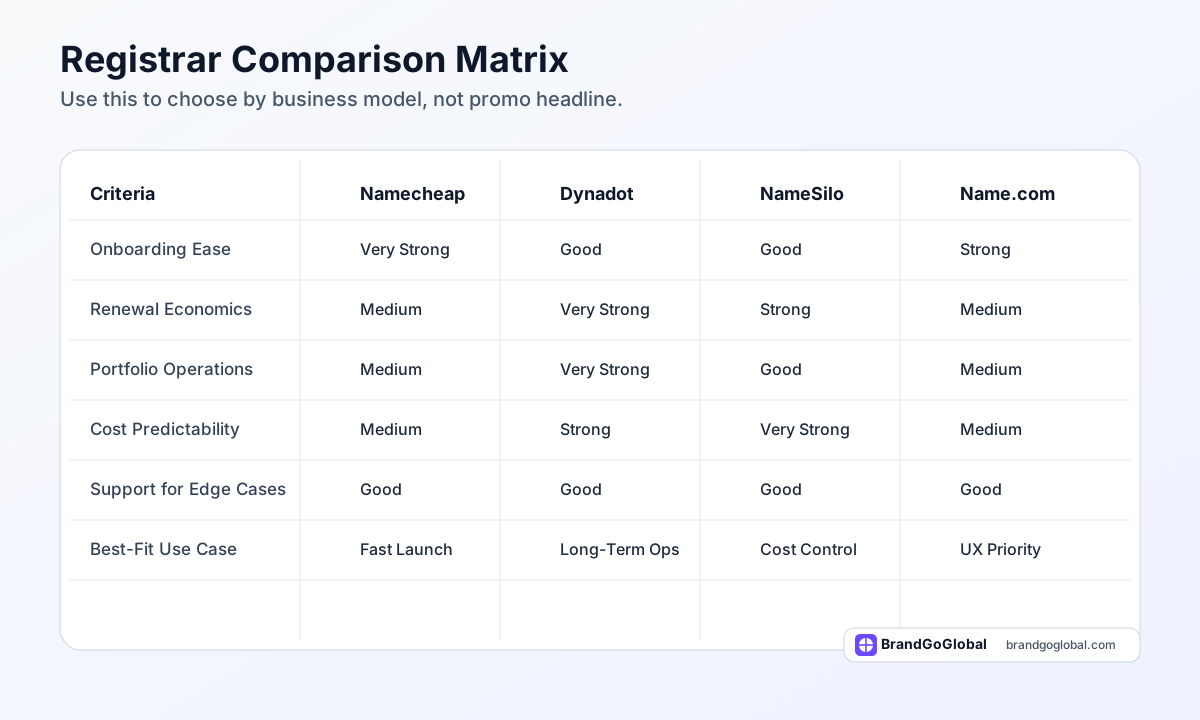
Figure: Quick side-by-side matrix to align registrar choice with your business model.
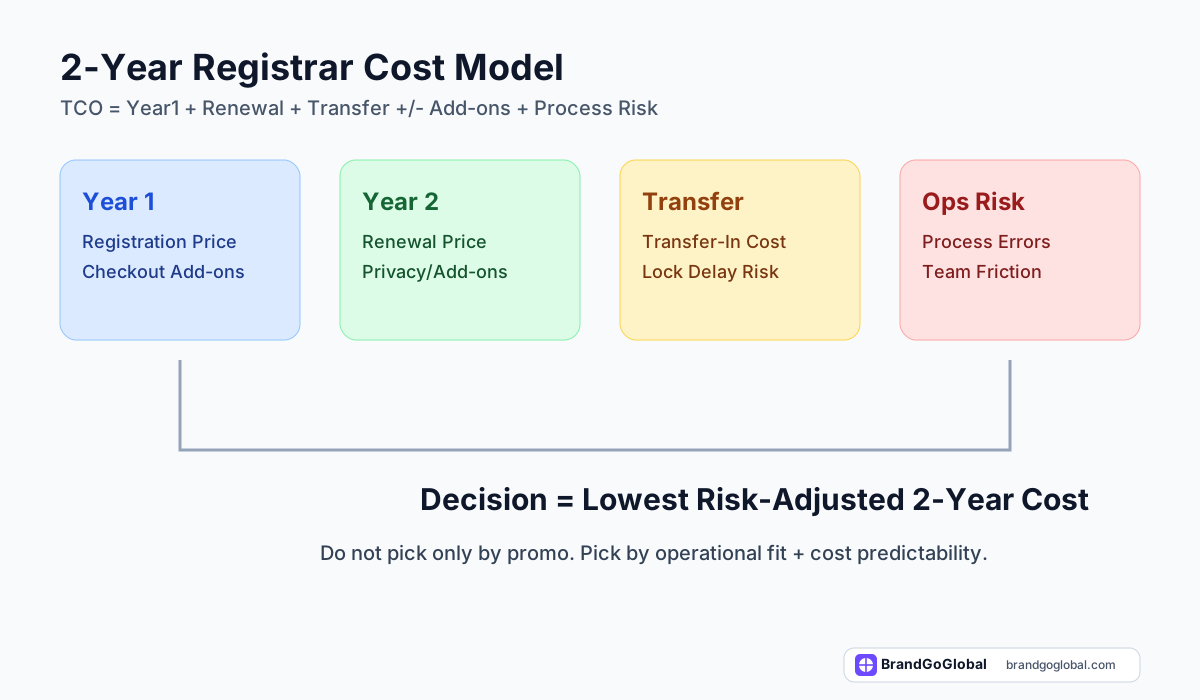
Figure: Evaluate registrar decisions by risk-adjusted 2-year cost, not by first-year promo only.
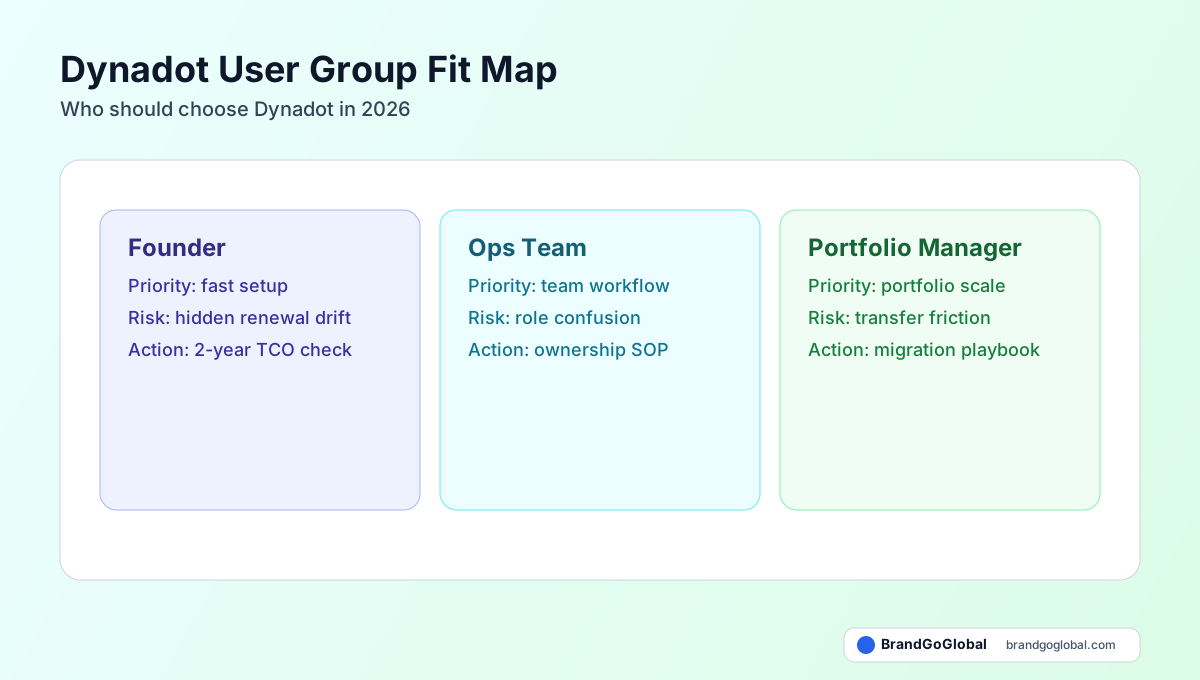
Figure: Persona-level decision map for dynadot-review-2026 across founder, ops, and portfolio contexts.
Validate User-Group Fit Before Registrar Lock-In
Compare pricing, workflow friction, and migration risk with your real domain list.
Dynadot is rarely the loudest registrar brand, but it is frequently the more rational choice for operators who care about renewal cost discipline and domain workflow depth. In 2026, that distinction matters more than ever because many teams are moving from “buy one domain” behavior to “operate multiple brand assets” behavior.
This BrandGoGlobal review focuses on decision quality: when Dynadot is truly better, when it is not, and how to avoid overpaying by following promo-first logic.
Quick Verdict
- Dynadot is strong when your horizon is 2+ years.
- Dynadot is strong when you own multiple domains or expect transfers.
- Dynadot is less compelling if you only need one low-friction purchase today.
- For portfolio-minded teams, Dynadot often outperforms on risk-adjusted total cost.
Evaluation Framework
We score registrars by six criteria:
- Renewal economics and cost predictability
- Day-to-day domain operation efficiency
- Transfer and lock management clarity
- Portfolio suitability and scaling behavior
- Support quality in non-happy-path workflows
- Strategic flexibility (ability to change later)
Dynadot performs well in criteria 1-4, which is why experienced operators frequently shortlist it.
Why Renewal Economics Should Lead the Decision
A registrar is not a one-time transaction. It is an operational dependency.
Most teams miscalculate by using this model:
- “Lowest registration price wins.”
The better model is:
- 2-3 year cost of ownership
- transfer optionality
- portfolio management overhead
- renewal shock probability
Dynadot’s advantage often appears when you compare these dimensions together.
Operational Strengths of Dynadot
Dynadot is built with operational users in mind.
Strengths usually include:
- clear domain search and management flows
- strong support for repeated registrar tasks
- better fit for users handling many domain records over time
- practical workflows around transfer and domain lifecycle actions
If your domain process is recurring, these gains compound monthly.
Ambassador Tracking Context (Why It Matters for Content Teams)
For affiliate-driven businesses, Dynadot’s ambassador tracking model can be action-specific (registration, transfer, auction, etc.). This supports cleaner attribution by traffic intent.
That means you can map content type to conversion type:
- review pages -> registration intent
- migration pages -> transfer intent
- portfolio pages -> auction/backorder intent
This is a meaningful advantage for SEO + affiliate operations teams that care about attribution quality.
Who Should Use Dynadot
High-Fit Profile
Dynadot is a high-fit choice when:
- you own or plan to own multiple domains
- renewal spend is actively monitored
- you have domain transfer activity
- domain operations are part of business process, not ad-hoc tasks
Moderate-Fit Profile
Dynadot is still viable when:
- you’re a single-domain startup but want future-proofing
- you’re willing to optimize process early
Low-Fit Profile
Dynadot may be unnecessary when:
- you buy one domain and don’t expect ongoing management
- your top priority is the simplest possible checkout with minimal evaluation
Dynadot vs Competitors (Use-Case Lens)
Dynadot vs Namecheap
- Namecheap often wins first-year simplicity.
- Dynadot often wins long-term operational economics.
Dynadot vs NameSilo
- Both can be cost-rational.
- Dynadot often feels stronger for broader operational workflows.
Dynadot vs Name.com
- Name.com can feel simpler for casual buyers.
- Dynadot usually fits better for portfolio-minded operators.
Related reading:
Migration and Governance Checklist
Before choosing Dynadot or any registrar, define:
- domain ownership policy (who controls root account)
- renewal reminder and backup payment process
- transfer playbook and lock/unlock SOP
- DNS change approval process
- emergency contact and recovery workflow
This governance layer often matters more than registrar marketing claims.
Common Dynadot Decision Mistakes
- Comparing registration prices only.
- Not estimating renewal cost across all planned domains.
- Ignoring transfer path until crisis.
- No role-based account governance.
- No DNS change control policy.
- Treating strategic and non-strategic domains equally.
- Delaying process design until after growth.
Final Recommendation
Dynadot is one of the best registrar choices in 2026 for teams that treat domains as operating assets. If your strategy is long-term, process-driven, and cost-aware, Dynadot deserves top-tier consideration.
If your situation is one-domain, one-time, and speed-only, another provider may be sufficient. The key is matching registrar behavior to business behavior.
Affiliate Disclosure
This article may contain affiliate links. BrandGoGlobal may receive a commission if you purchase through them, at no additional cost to you.
FAQs
Is Dynadot better than Namecheap in 2026?
For renewal-focused and multi-domain operations, often yes. For pure first-time convenience, Namecheap may feel easier.
Is Dynadot good for startup founders?
Yes, especially founders planning long-term domain ownership and disciplined cost control.
Should I choose Dynadot for one domain only?
It can still work, but the strongest advantages usually appear with recurring domain workflows.
Market-Aligned User Segments (EN)
Based on BrandGoGlobal's 2026 positioning, English-market buyers are usually SaaS founders, indie builders, and growth operators who are actively rejecting generic “AI-sounding” naming patterns. For this audience, registrar choice is not only a purchase decision, it is a brand execution decision tied to launch speed, domain credibility, and social handle consistency.
Segment 1: SaaS Founders (Speed + Brand Signal)
- Primary objective: ship fast with a brand that feels human, not algorithmic.
- Registrar decision criteria: checkout clarity, renewal predictability, transfer flexibility.
- Risk if misaligned: fast launch now, painful migration later when product-market fit arrives.
Segment 2: Indie Hackers (Cost Discipline + Iteration)
- Primary objective: test brand concepts quickly without creating expensive renewal debt.
- Registrar decision criteria: 2-year TCO, add-on transparency, simple DNS control.
- Risk if misaligned: low first-year price masks long-term spend and limits iteration cadence.
Segment 3: Growth Teams (Portfolio + Governance)
- Primary objective: manage multiple domains for product pages, experiments, and positioning campaigns.
- Registrar decision criteria: account governance, transfer SOP, operational stability across teams.
- Risk if misaligned: ownership confusion, delayed launches, and avoidable brand trust loss.
EN Market Decision Rule
If your team cannot pass all three checks below, do not finalize registrar choice:
- 2-year cost model is documented for your real domain list.
- Ownership and renewal responsibilities are assigned by role, not by person.
- Transfer and rollback path is clear before launch day.
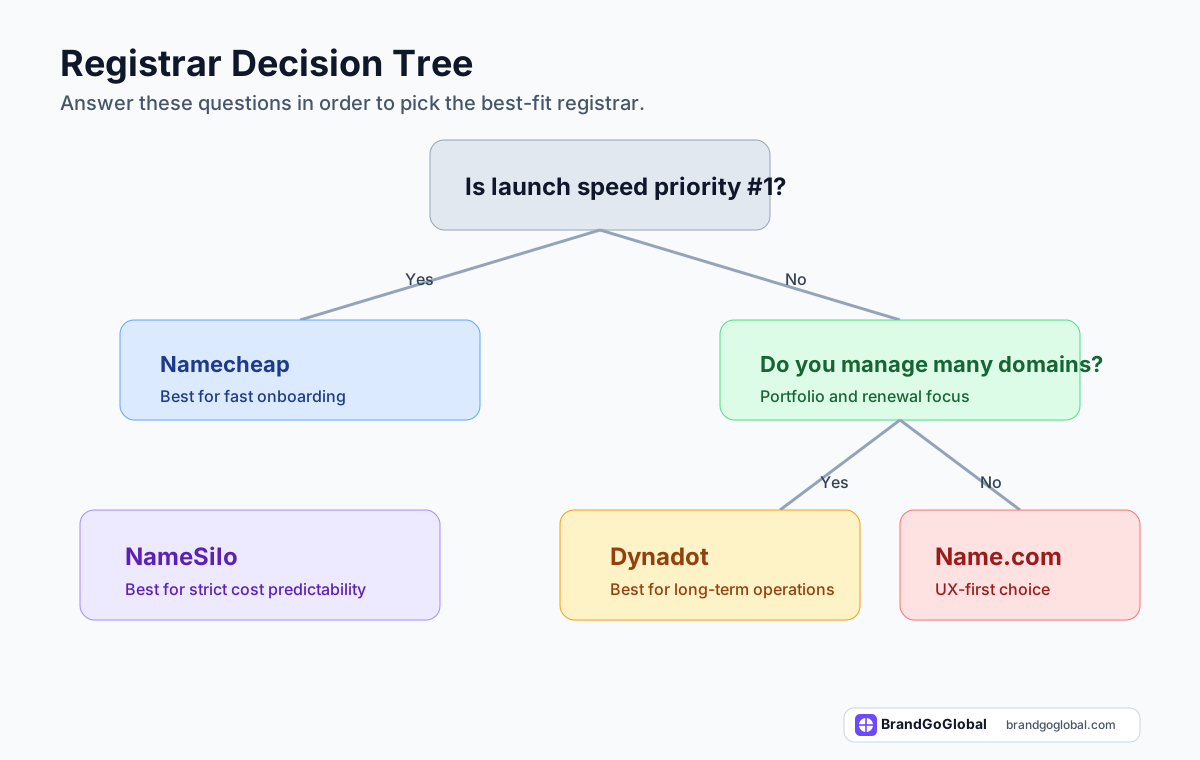
Figure: Decision path by launch speed, portfolio scale, and cost control priority.
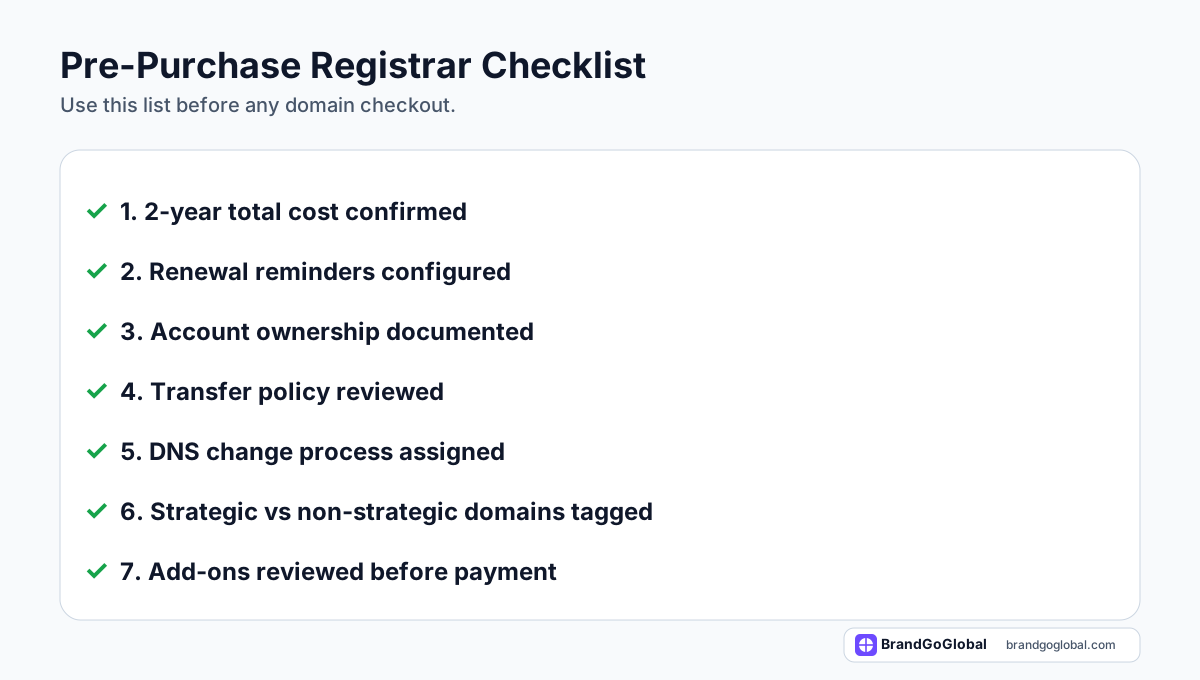
Figure: Final checklist before checkout to reduce renewal and transfer mistakes.
Check Real Cost and Workflow Fit Before You Buy
Compare top registrars with one query and decide using a 2-year model.