Namecheap Review 2026: Pricing, Renewal Traps, and Best Fit for Startups
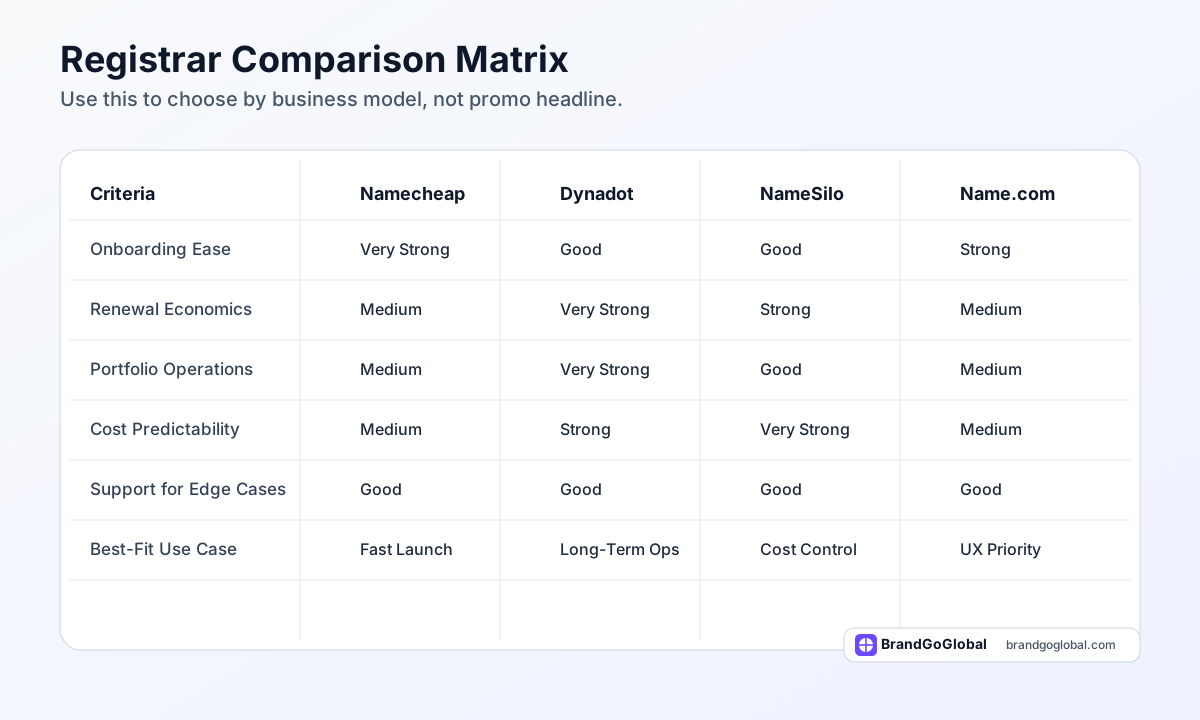
Figure: Quick side-by-side matrix to align registrar choice with your business model.
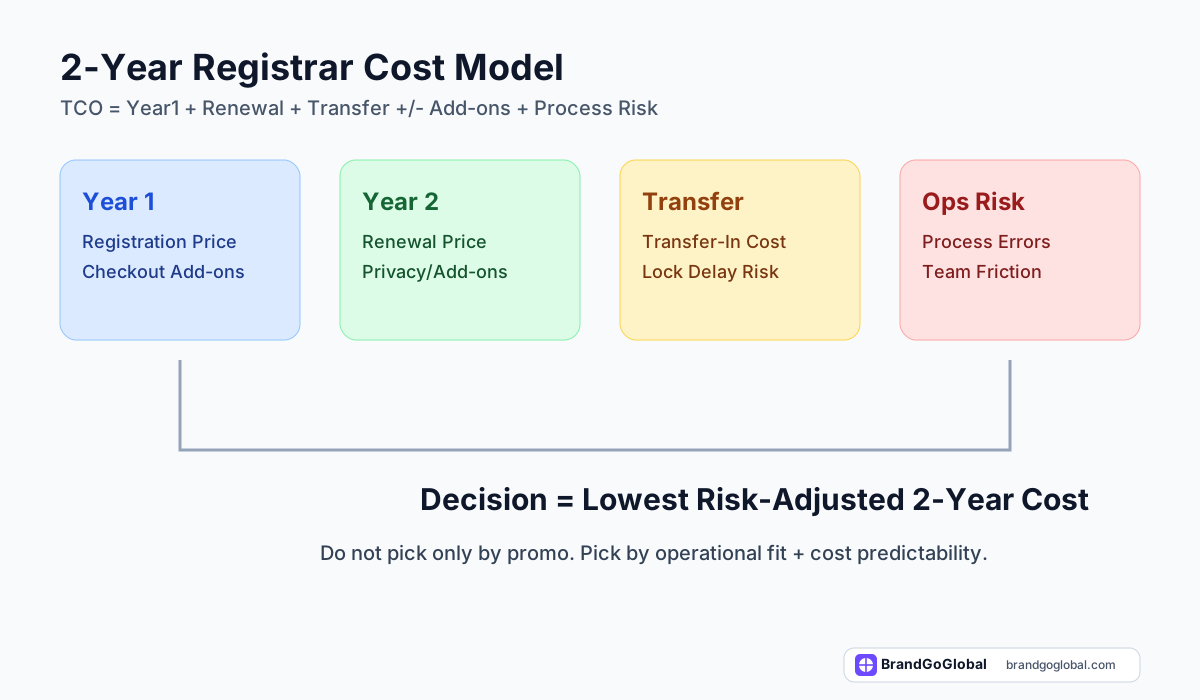
Figure: Evaluate registrar decisions by risk-adjusted 2-year cost, not by first-year promo only.
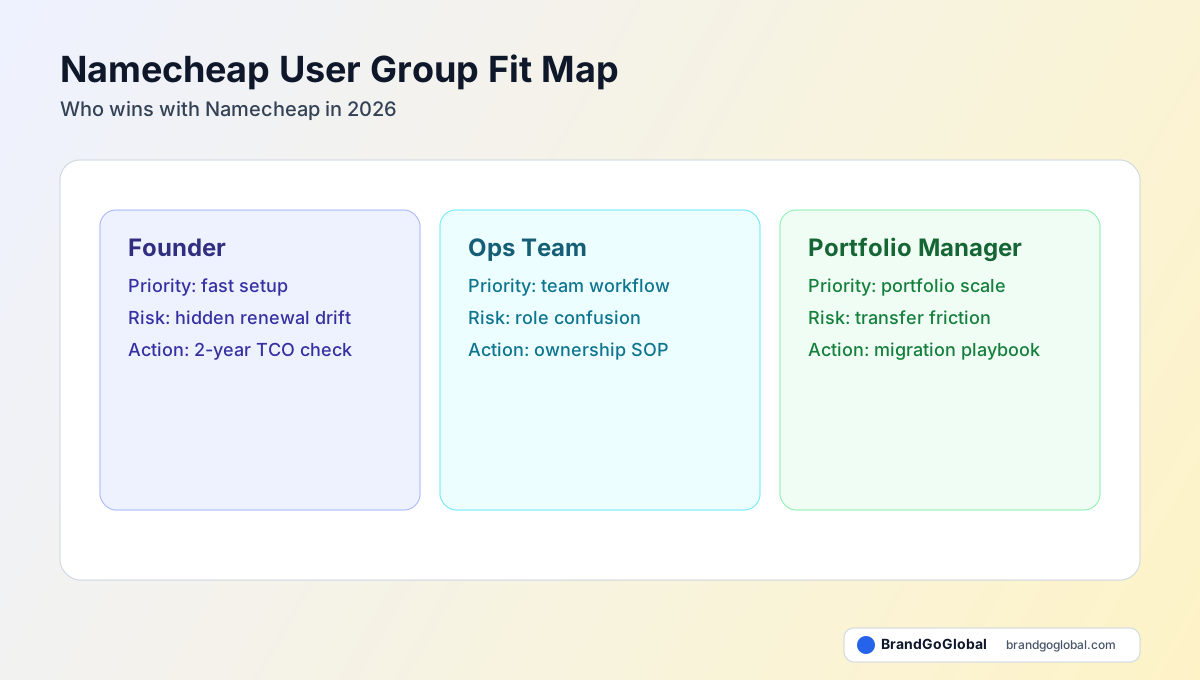
Figure: Persona-level decision map for namecheap-review-2026 across founder, ops, and portfolio contexts.
Validate User-Group Fit Before Registrar Lock-In
Compare pricing, workflow friction, and migration risk with your real domain list.
Namecheap is still one of the most searched registrars in 2026, but the real decision is not whether its first-year promo looks good. The real decision is whether Namecheap matches your operating model after year one. If you run one project and optimize launch speed, Namecheap is usually a safe choice. If you manage multiple domains or care about predictable renewals, you must compare total cost of ownership before paying.
This BrandGoGlobal guide is built for founders and operators who want a practical buying framework, not generic “best registrar” claims.
Quick Verdict (If You Need an Answer in 60 Seconds)
- Namecheap is strong when your priority is fast launch and low first-year friction.
- Namecheap is weaker when renewal economics are your core KPI.
- If you buy one domain this month, Namecheap is often fine.
- If you plan to manage 5-50 domains for 2+ years, compare Dynadot and NameSilo before checkout.
- Best workflow: run a side-by-side check in Domain Tools, then decide by 2-year cost, not day-one promo.
Methodology: How We Evaluated Namecheap
To avoid opinion bias, we score each registrar on six operational dimensions:
- Pricing clarity (registration, renewal, transfer, hidden add-ons)
- Control panel efficiency (DNS, nameserver, lock, transfer flow)
- Support quality under real friction (billing edits, transfer blockers)
- Portfolio management suitability (single domain vs multi-domain)
- Operational risk (unexpected cost jumps, process ambiguity)
- Migration flexibility (how hard it is to move later)
This is why our recommendation may differ from “best registrar” listicles that only rank by first displayed price.
Pricing Reality: Why First-Year Price Is an Incomplete Signal
Most startup buyers overfit to registration promo price. That produces avoidable budget errors.
A registrar decision should use a 2-year model at minimum:
- Year 1 registration cost
- Year 2 renewal cost
- Transfer-in possibility and timing
- Privacy inclusion/exclusion
- Add-ons accidentally purchased at checkout
Practical Cost Lens for Founders
Use this decision logic:
- If cash is extremely tight and brand risk is low: first-year discount matters more.
- If domain is core brand asset: renewal and transfer flexibility matter more.
- If you’ll own multiple domains: pricing predictability beats short-term discounts.
Namecheap often wins in scenario 1, but not always in scenarios 2-3.
UX and Control Panel: Where Namecheap Delivers
Namecheap’s product experience is one reason it remains default for first-time buyers.
Operational positives:
- Search and checkout are easy to complete without support.
- DNS edits are understandable for non-experts.
- Domain lock and nameserver settings are accessible.
- Ecosystem upsells are tightly integrated.
Operational caveats:
- Checkout add-ons require active attention.
- Users who buy quickly can miss recurring extras.
- Portfolio-heavy workflows may feel less cost-optimized than alternatives.
Support and Trust: What Happens After Purchase Matters More
Buying a domain is easy almost everywhere. Managing edge cases is where provider quality is exposed.
Typical founder edge cases:
- team changed and email ownership is unclear
- transfer timeline conflicts with launch window
- billing details need correction after payment
- domain lock status blocks urgent move
Namecheap support is acceptable for most SMB cases, but your process should not rely on support speed. Build internal checklists to prevent support-dependent mistakes.
Who Should Choose Namecheap (and Who Should Not)
Strong Fit
Choose Namecheap when:
- You are launching fast and need low buying friction.
- Your team is small and non-technical.
- You want a mainstream registrar with familiar UX.
Medium Fit
Use Namecheap with caution when:
- You expect to scale from 1 domain to 10+ domains.
- You care about long-term cost control.
- You may transfer providers within 12-24 months.
Weak Fit
Consider alternatives first when:
- Renewal predictability is mission-critical.
- Domain portfolio management is a core workflow.
- You actively optimize registrar-level unit economics.
Namecheap vs Dynadot vs NameSilo vs Name.com (Decision Angles)
Instead of feature overload, use four decision questions:
- Is launch speed or long-term cost more important?
- Is this one strategic domain or a portfolio?
- Will non-technical team members manage DNS?
- Do we expect transfer activity in year 1-2?
Interpretation:
- Namecheap: easiest default for fast execution.
- Dynadot: strong for operations and renewal-focused planning.
- NameSilo: pragmatic for cost discipline.
- Name.com: often chosen for customer-facing simplicity.
Read cross-check guides:
Top 10 Namecheap Mistakes Founders Make
- Buying based on registration promo only.
- Not modeling renewal before purchase.
- Skipping transfer policy review.
- Letting checkout add-ons auto-accumulate.
- No internal domain ownership SOP.
- Missing renewal reminder process.
- No centralized credential and recovery plan.
- Treating all domains as equally important.
- Delaying registrar comparison until renewal shock.
- Ignoring how domain operations affect launch risk.
2-Year Registrar Decision Template (Use This Before Checkout)
For each candidate registrar, fill:
- Domain/TLD:
- Year 1 cost:
- Year 2 renewal:
- Transfer-in cost:
- Privacy cost:
- Checkout add-ons likely:
- Team usability score (1-5):
- Expected migration need (low/medium/high):
- Risk note:
Then choose the registrar with the best risk-adjusted 2-year cost, not the cheapest headline.
Final Recommendation
Namecheap remains a legitimate registrar choice in 2026 for startup teams that value execution speed and simplicity. But it should no longer be an automatic choice for everyone. If your domain is a long-term operating asset, compare alternatives before buying and lock your internal governance process on day one.
Affiliate Disclosure
This article may include affiliate links. If you buy through these links, BrandGoGlobal may earn a commission at no extra cost to you.
FAQs
Is Namecheap still good in 2026?
Yes, especially for fast launch and straightforward management. It is less compelling if long-term renewal optimization is your top priority.
Is Namecheap cheaper than Dynadot?
Sometimes in year 1, not always over 2+ years. Compare both registration and renewal.
Should startups switch registrars later?
Only if long-term economics or operational constraints justify migration cost and risk.
Market-Aligned User Segments (EN)
Based on BrandGoGlobal's 2026 positioning, English-market buyers are usually SaaS founders, indie builders, and growth operators who are actively rejecting generic “AI-sounding” naming patterns. For this audience, registrar choice is not only a purchase decision, it is a brand execution decision tied to launch speed, domain credibility, and social handle consistency.
Segment 1: SaaS Founders (Speed + Brand Signal)
- Primary objective: ship fast with a brand that feels human, not algorithmic.
- Registrar decision criteria: checkout clarity, renewal predictability, transfer flexibility.
- Risk if misaligned: fast launch now, painful migration later when product-market fit arrives.
Segment 2: Indie Hackers (Cost Discipline + Iteration)
- Primary objective: test brand concepts quickly without creating expensive renewal debt.
- Registrar decision criteria: 2-year TCO, add-on transparency, simple DNS control.
- Risk if misaligned: low first-year price masks long-term spend and limits iteration cadence.
Segment 3: Growth Teams (Portfolio + Governance)
- Primary objective: manage multiple domains for product pages, experiments, and positioning campaigns.
- Registrar decision criteria: account governance, transfer SOP, operational stability across teams.
- Risk if misaligned: ownership confusion, delayed launches, and avoidable brand trust loss.
EN Market Decision Rule
If your team cannot pass all three checks below, do not finalize registrar choice:
- 2-year cost model is documented for your real domain list.
- Ownership and renewal responsibilities are assigned by role, not by person.
- Transfer and rollback path is clear before launch day.
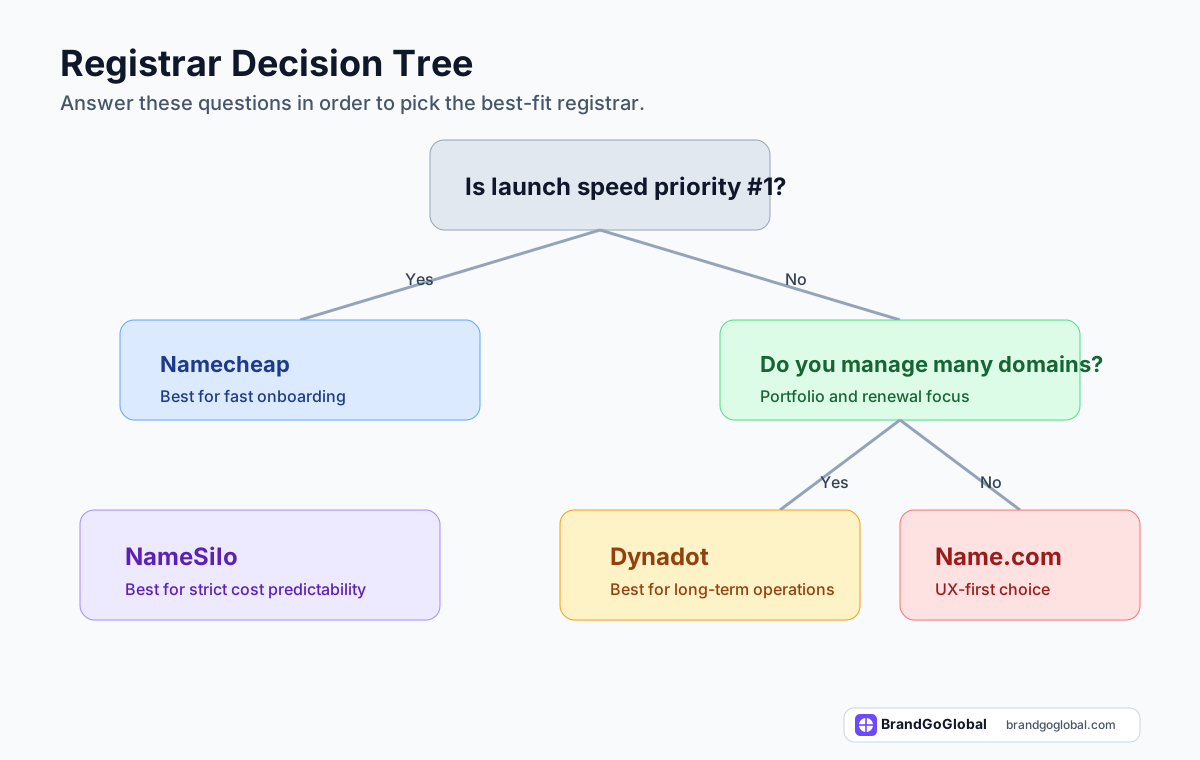
Figure: Decision path by launch speed, portfolio scale, and cost control priority.
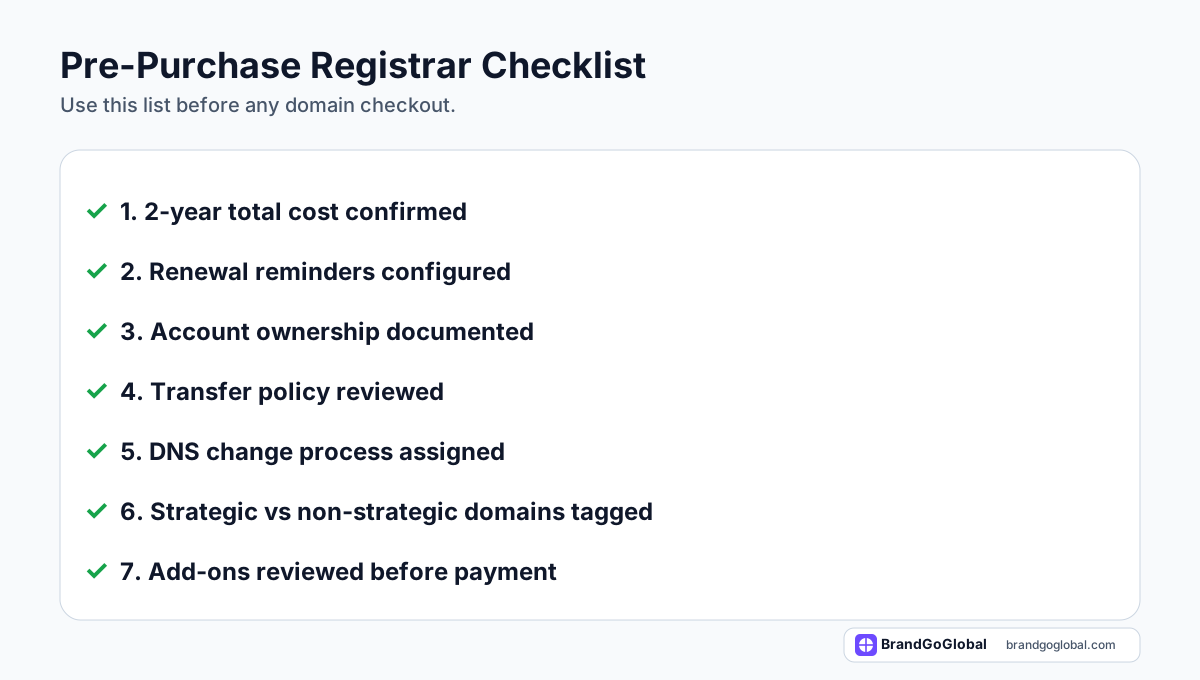
Figure: Final checklist before checkout to reduce renewal and transfer mistakes.
Decide by 2-Year Economics, Not by Promo Copy
Compare Namecheap, Dynadot, NameSilo, and Name.com with one domain query.