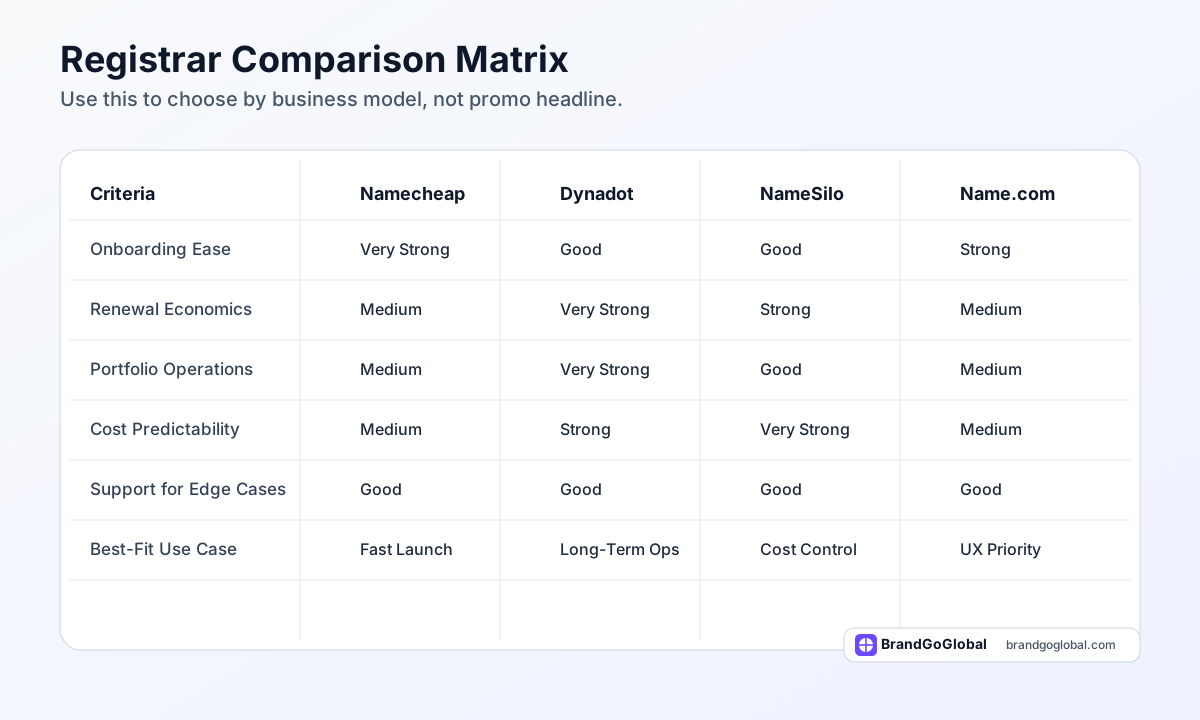
Figure: Quick side-by-side matrix to align registrar choice with your business model.
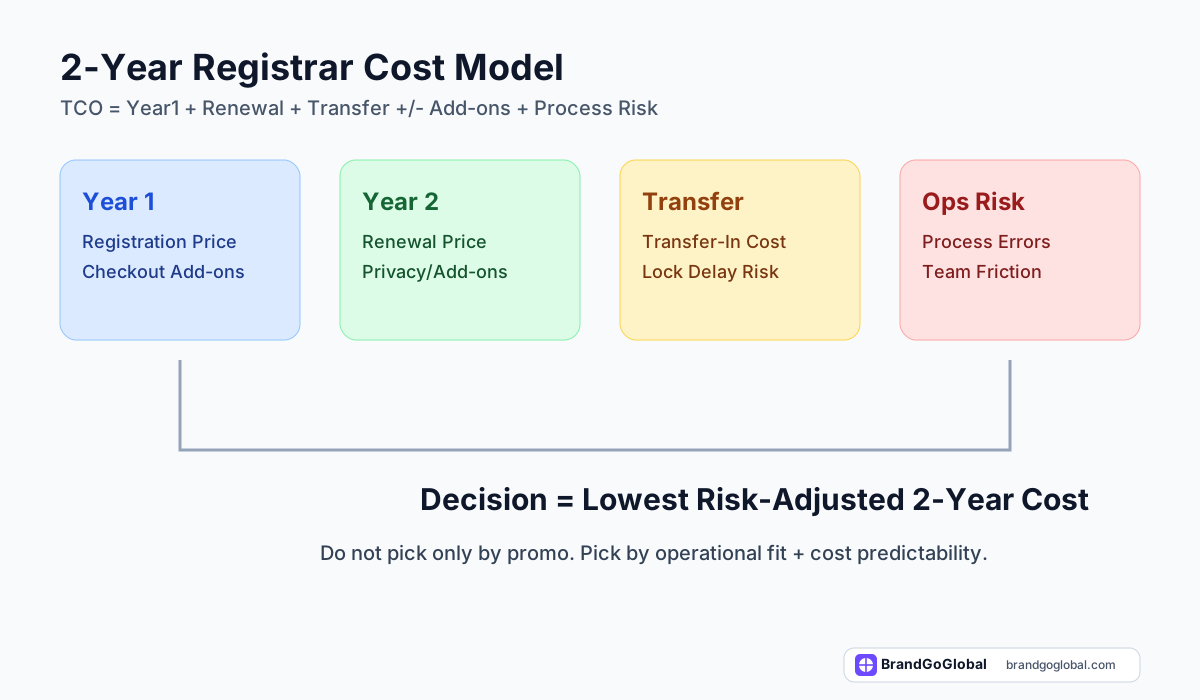
Figure: Evaluate registrar decisions by risk-adjusted 2-year cost, not by first-year promo only.
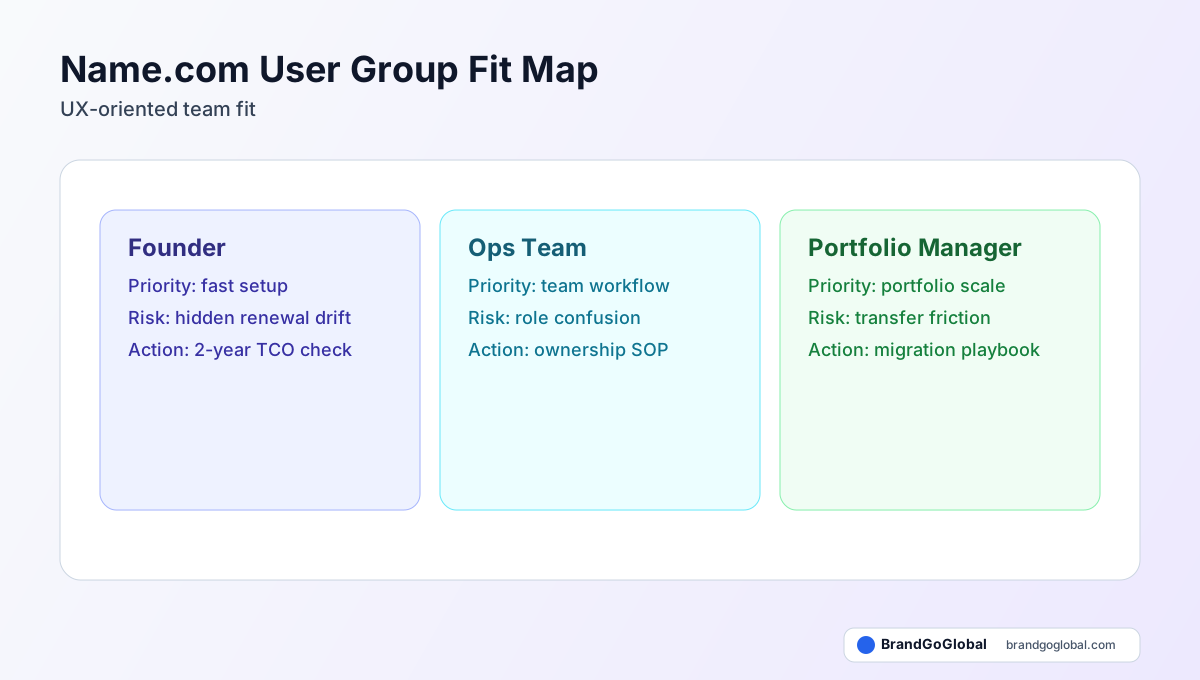
Figure: Persona-level decision map for name-com-review-2026 across founder, ops, and portfolio contexts.
Validate User-Group Fit Before Registrar Lock-In
Compare pricing, workflow friction, and migration risk with your real domain list.
Name.com is usually shortlisted by teams that value clarity over complexity. In 2026, it remains one of the cleaner registrar experiences for cross-functional teams where founders, marketers, and operations all touch domains. The trade-off is simple: UX is often strong, but long-term economics still need an explicit check.
Executive Verdict
- Name.com is a strong UX-first registrar for low-to-medium operational complexity.
- It performs well when domain ownership is centralized and process discipline exists.
- It can be suboptimal if your main KPI is long-horizon registrar unit economics.
- The right decision depends on whether your bottleneck is execution speed or cost predictability.
What Name.com Does Better Than Most Buyers Expect
Most registrar reviews over-focus on headline price. In real operations, friction and mistakes cost more than a small price delta. Name.com tends to reduce avoidable mistakes in three areas:
- Search-to-checkout clarity for non-technical contributors.
- Better readability of core account actions for mixed-role teams.
- Lower onboarding friction when a startup has no domain SOP yet.
That means less internal back-and-forth and faster initial setup, which can matter during launch windows.
UX Workflow Breakdown (Why Teams Choose It)
1) Discovery and Selection
Name.com usually provides a direct, understandable search experience. Teams with limited technical context can still evaluate options quickly.
2) Checkout and Initial Setup
For teams that need to ship, the setup path is straightforward enough that one owner can finish it without creating process debt on day one.
3) Ongoing Admin Tasks
Routine actions are workable for standard operations, including DNS edits, nameserver updates, and basic account-level controls.
This is not a "power-user heavy" platform identity, but it is often a "get it done without confusion" platform.
Cost Reality: Where Teams Misjudge Name.com
Name.com may feel better operationally, but that does not automatically make it a better 2-year choice.
Always compare:
- registration price,
- renewal price,
- transfer-in and transfer-out expectations,
- add-on behavior during checkout and renewal.
A registrar with cleaner UX can still become expensive if renewal assumptions are not modeled early.
Fit by Business Scenario
Scenario A: One Core Brand Domain
Name.com can be a practical default if your objective is fast, low-friction execution with minimal internal confusion.
Scenario B: Startup with 3-10 Domains
Still viable, but your decision should include year-two budgeting and role ownership. UX benefits can remain meaningful here.
Scenario C: Portfolio and Recurring Domain Operations
This is where you should aggressively benchmark against Dynadot and NameSilo. If domain operations become a repeatable system, operational depth and renewal behavior may outweigh first-impression UX.
Governance Checklist Before You Commit
- Define registrar account ownership policy.
- Document DNS change authority and escalation.
- Set renewal reminders with backup payment control.
- Clarify transfer policy before expansion.
- Separate strategic domains from utility domains.
Teams that skip this governance layer usually blame the registrar later for process issues they never owned.
Name.com vs Namecheap, Dynadot, NameSilo
- Namecheap: broader familiarity and quick-start appeal.
- Dynadot: often stronger for long-term operational rigor.
- NameSilo: often attractive for cost discipline and predictable planning.
- Name.com: strongest where user clarity and execution simplicity are top priorities.
Related guides:
Common Buyer Errors with Name.com
- Assuming better UX means better long-term cost.
- Skipping 2-year budget simulation before checkout.
- Not defining account ownership standards.
- Leaving transfer strategy undefined until a deadline crisis.
- Treating all domains with the same priority profile.
Final Recommendation
If your organization needs smoother execution and lower operational confusion, Name.com is a legitimate 2026 option. If your registrar strategy is primarily an economics game, validate against Dynadot and NameSilo with a 2-year model before deciding.
Affiliate Disclosure
This article may contain affiliate links. BrandGoGlobal may receive a commission at no extra cost to you.
FAQs
Is Name.com a good registrar for startup teams in 2026?
Yes, especially for teams prioritizing clarity and speed of execution.
Is Name.com always cheaper than alternatives?
No. Cost competitiveness depends on renewal and transfer behavior over time.
Should domain-heavy teams choose Name.com by default?
Not by default. Compare it with Dynadot and NameSilo using your real domain list.
Market-Aligned User Segments (EN)
Based on BrandGoGlobal's 2026 positioning, English-market buyers are usually SaaS founders, indie builders, and growth operators who are actively rejecting generic “AI-sounding” naming patterns. For this audience, registrar choice is not only a purchase decision, it is a brand execution decision tied to launch speed, domain credibility, and social handle consistency.
Segment 1: SaaS Founders (Speed + Brand Signal)
- Primary objective: ship fast with a brand that feels human, not algorithmic.
- Registrar decision criteria: checkout clarity, renewal predictability, transfer flexibility.
- Risk if misaligned: fast launch now, painful migration later when product-market fit arrives.
Segment 2: Indie Hackers (Cost Discipline + Iteration)
- Primary objective: test brand concepts quickly without creating expensive renewal debt.
- Registrar decision criteria: 2-year TCO, add-on transparency, simple DNS control.
- Risk if misaligned: low first-year price masks long-term spend and limits iteration cadence.
Segment 3: Growth Teams (Portfolio + Governance)
- Primary objective: manage multiple domains for product pages, experiments, and positioning campaigns.
- Registrar decision criteria: account governance, transfer SOP, operational stability across teams.
- Risk if misaligned: ownership confusion, delayed launches, and avoidable brand trust loss.
EN Market Decision Rule
If your team cannot pass all three checks below, do not finalize registrar choice:
- 2-year cost model is documented for your real domain list.
- Ownership and renewal responsibilities are assigned by role, not by person.
- Transfer and rollback path is clear before launch day.
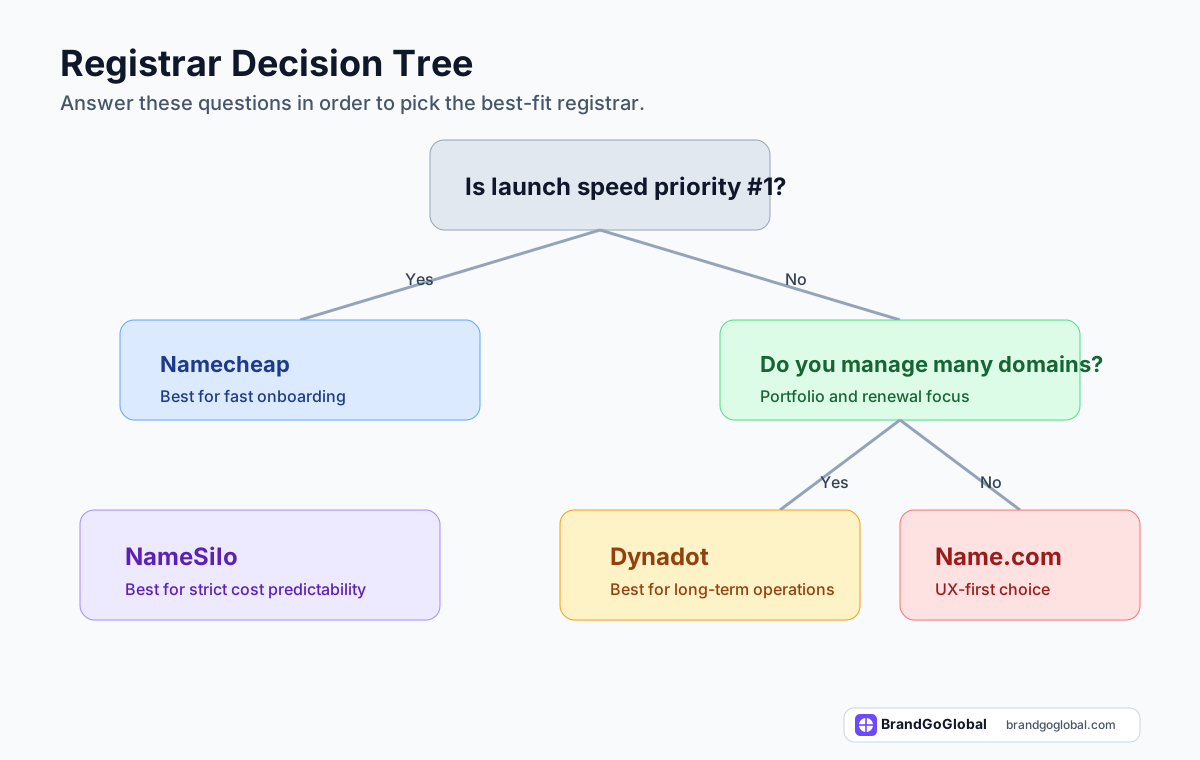
Figure: Decision path by launch speed, portfolio scale, and cost control priority.
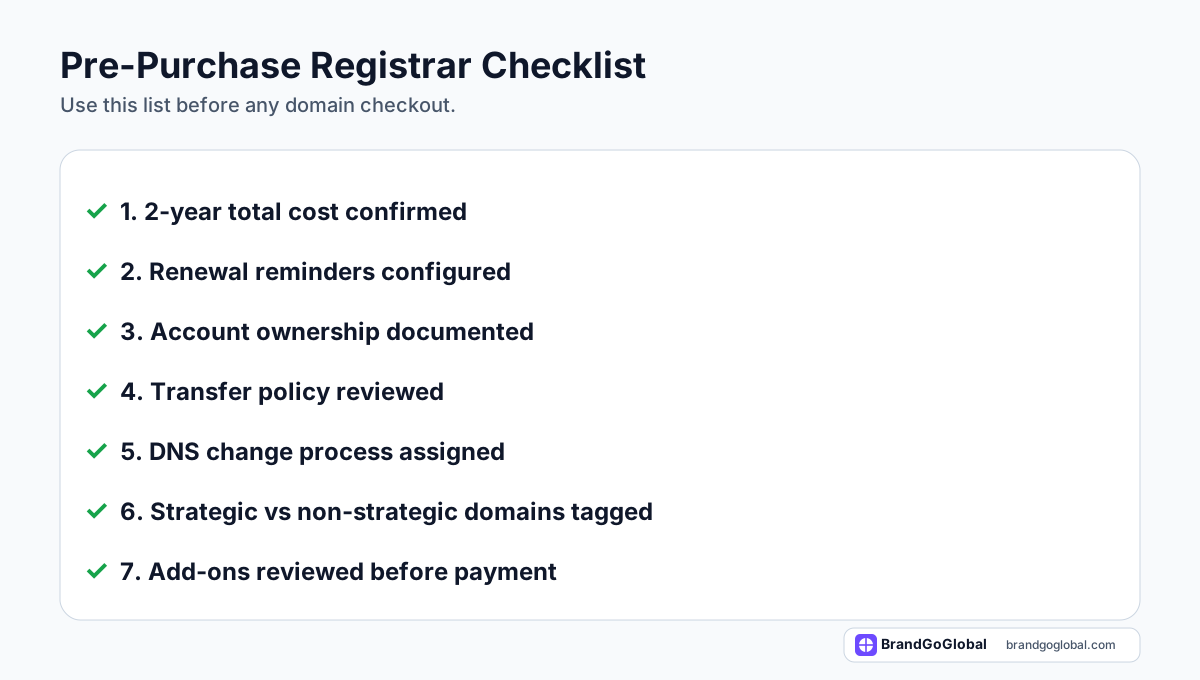
Figure: Final checklist before checkout to reduce renewal and transfer mistakes.
Verify UX Value with 2-Year Cost, Not Just First Impression
Run one-side comparison for Name.com, Namecheap, Dynadot, and NameSilo before checkout.