NameSilo Review 2026: Predictable Renewal Costs for Practical Operators
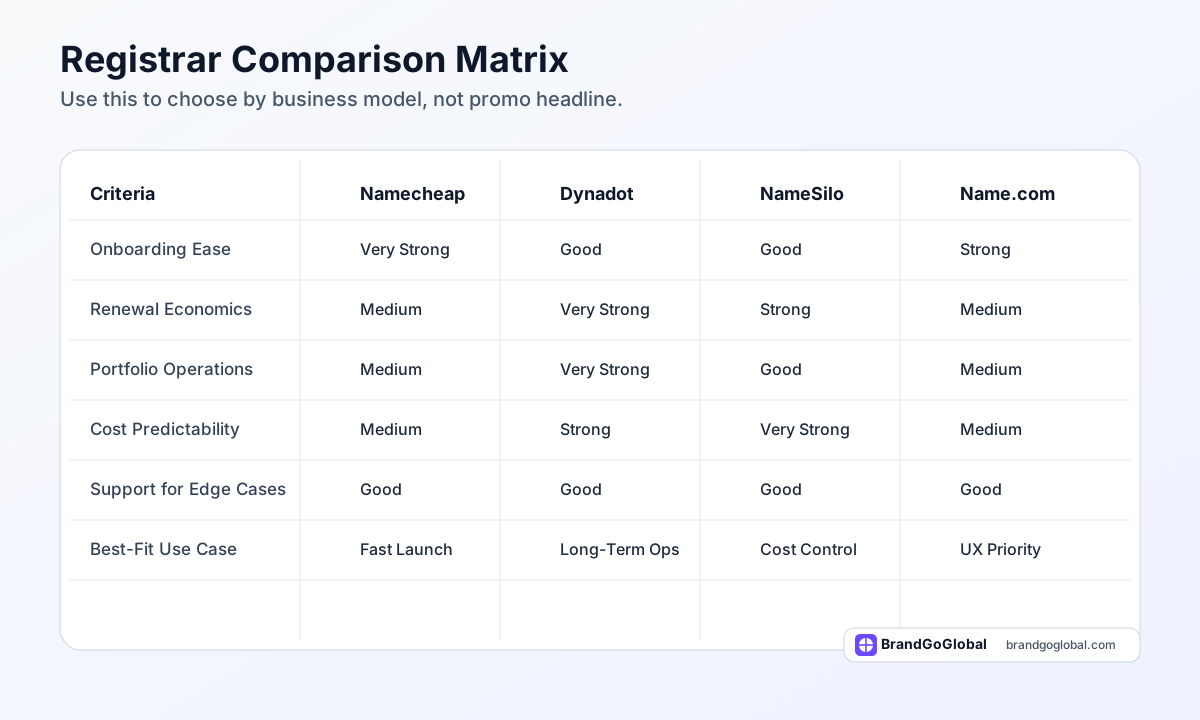
Figure: Quick side-by-side matrix to align registrar choice with your business model.
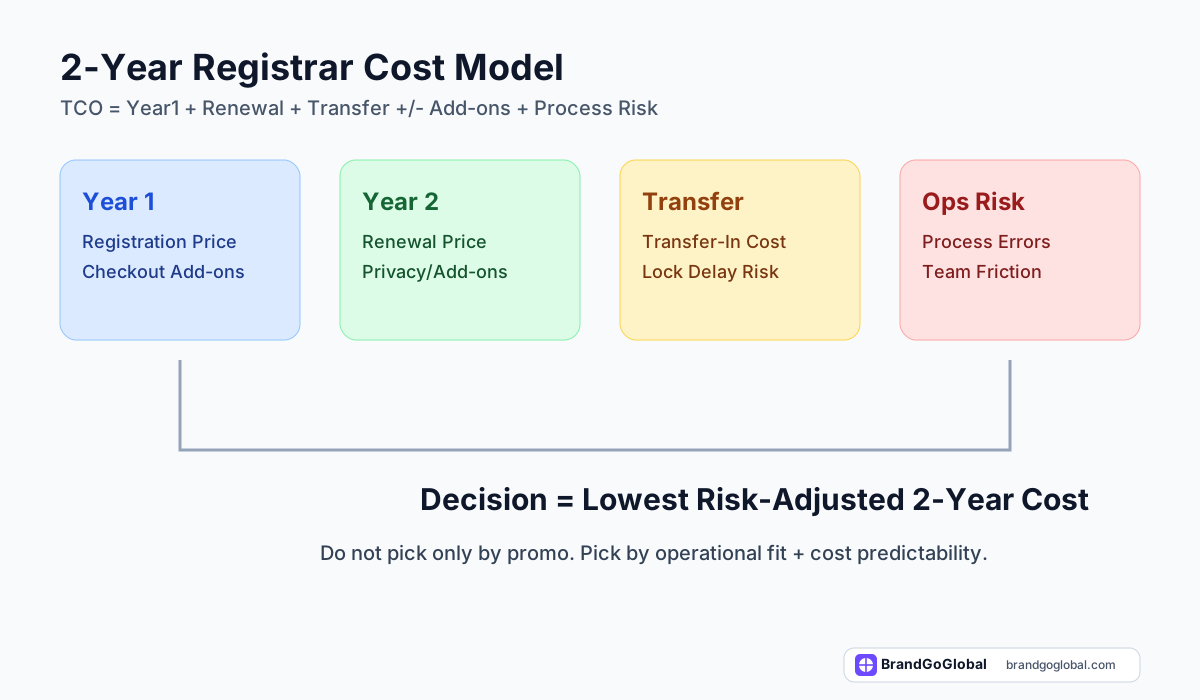
Figure: Evaluate registrar decisions by risk-adjusted 2-year cost, not by first-year promo only.
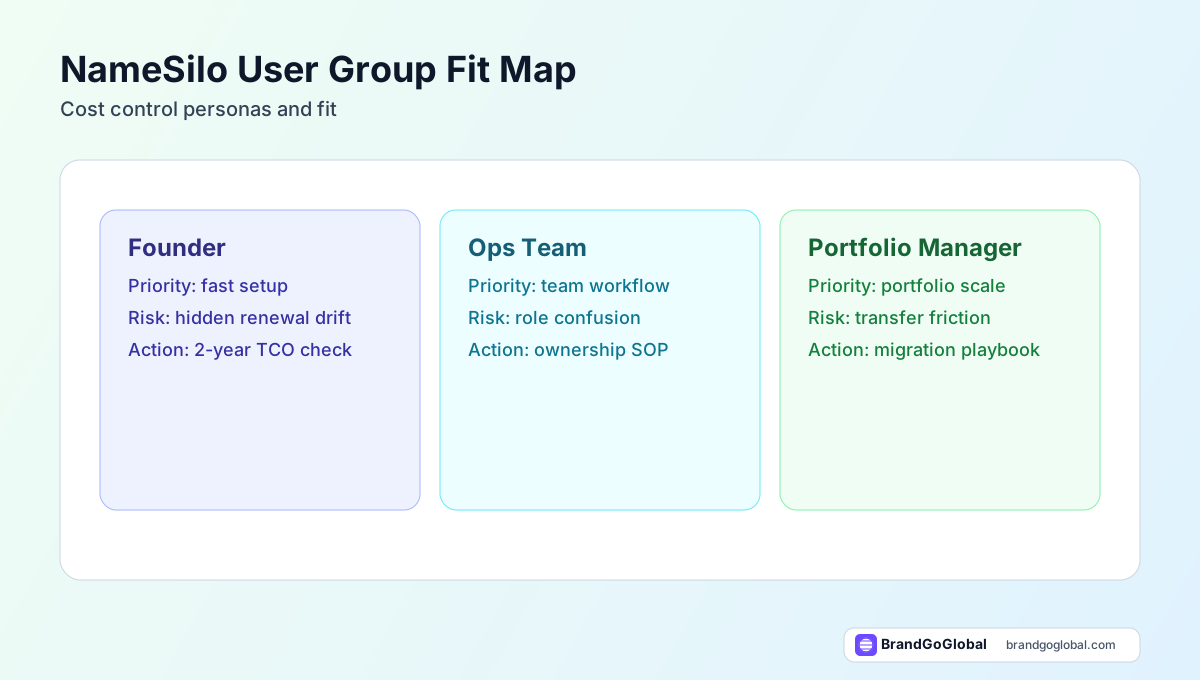
Figure: Persona-level decision map for namesilo-review-2026 across founder, ops, and portfolio contexts.
Validate User-Group Fit Before Registrar Lock-In
Compare pricing, workflow friction, and migration risk with your real domain list.
NameSilo is not usually the loudest brand in registrar rankings, but in 2026 it remains one of the most practical choices for teams that care about cost predictability over headline promotion. If you’ve ever been surprised by renewal spikes, NameSilo is worth serious evaluation.
This BrandGoGlobal guide focuses on operator-level insight: where NameSilo creates real value, where it falls short, and how to decide with a multi-year model.
Quick Verdict
- NameSilo is strong for predictable long-term cost behavior.
- NameSilo is strong for budget-conscious teams with several domains.
- NameSilo is weaker on premium “consumer brand” polish.
- If your KPI is spend control, NameSilo should be in your top comparison set.
Why NameSilo Matters in 2026
Many startups now manage multiple domain assets:
- primary brand domain
- defensive domain variants
- campaign domains
- market/language domains
In this reality, registrar selection is no longer cosmetic. It becomes an operating margin decision.
NameSilo’s core proposition is simple: reduce surprise and keep recurring domain costs understandable.
Practical Pricing Framework
Never compare only registration banners. For each registrar, map:
- first-year price
- year-2+ renewal
- transfer-in cost
- privacy and add-on structure
- effective annual cost for your real domain count
NameSilo often performs better in this model than in promo-only comparisons.
Product and Workflow Experience
NameSilo’s interface is typically functional first.
Pros:
- reliable baseline tools for domain management
- straightforward recurring operations
- practical fit for budget-governed teams
Cons:
- less polished visual experience than some mainstream alternatives
- less “guided” feeling for first-time users
For execution-oriented teams, this tradeoff is usually acceptable.
Who Should Choose NameSilo
Strong Fit
Choose NameSilo when:
- finance discipline matters for domain spend
- you manage multiple domains across projects
- you prefer predictable renewals over flashy first-year offers
Medium Fit
Use NameSilo with review when:
- your team values polished UX but still needs cost control
- you may mix registrars by project type
Low Fit
NameSilo may not be ideal when:
- your team wants a highly guided consumer-style experience
- your registrar choice is driven mainly by one-time onboarding comfort
NameSilo vs Major Alternatives
- vs Namecheap: Namecheap often wins on beginner-friendliness; NameSilo often wins on predictable economics.
- vs Dynadot: both can be strong for long-term logic; final choice depends on operational preference.
- vs Name.com: Name.com can feel more polished; NameSilo often feels more budget-rational.
Related guides:
12-Month Operating Playbook for NameSilo Users
- Define domain tiering: strategic vs non-strategic.
- Set renewal alerts at 90/30/7 days.
- Consolidate payment and account ownership.
- Document DNS change process.
- Audit add-ons quarterly.
- Review transfer options annually.
- Track effective cost per managed domain.
Teams that operationalize these steps get more value than teams that only “pick a registrar.”
Typical Mistakes
- Assuming “cheap now” equals “cheap later.”
- No domain inventory governance.
- No renewal responsibility owner.
- No migration contingency plan.
- Treating registrar as static vendor instead of operating partner.
Final Recommendation
NameSilo is an excellent practical option in 2026 for teams that run domains like assets, not one-off purchases. If you value predictable recurring economics, it is often better than more heavily marketed alternatives.
Still, run side-by-side comparison before checkout. Registrar quality is context-dependent.
Affiliate Disclosure
This article may include affiliate links. BrandGoGlobal may earn a commission if you purchase through them, at no additional cost to you.
FAQs
Is NameSilo good for startups?
Yes, especially startups that care about recurring cost control across multiple domains.
Is NameSilo cheaper than Namecheap?
Sometimes over multi-year usage. Compare renewals and total portfolio cost, not only year-one deals.
Should I use NameSilo for one domain only?
You can, but the strongest value appears when managing several domains long term.
Market-Aligned User Segments (EN)
Based on BrandGoGlobal's 2026 positioning, English-market buyers are usually SaaS founders, indie builders, and growth operators who are actively rejecting generic “AI-sounding” naming patterns. For this audience, registrar choice is not only a purchase decision, it is a brand execution decision tied to launch speed, domain credibility, and social handle consistency.
Segment 1: SaaS Founders (Speed + Brand Signal)
- Primary objective: ship fast with a brand that feels human, not algorithmic.
- Registrar decision criteria: checkout clarity, renewal predictability, transfer flexibility.
- Risk if misaligned: fast launch now, painful migration later when product-market fit arrives.
Segment 2: Indie Hackers (Cost Discipline + Iteration)
- Primary objective: test brand concepts quickly without creating expensive renewal debt.
- Registrar decision criteria: 2-year TCO, add-on transparency, simple DNS control.
- Risk if misaligned: low first-year price masks long-term spend and limits iteration cadence.
Segment 3: Growth Teams (Portfolio + Governance)
- Primary objective: manage multiple domains for product pages, experiments, and positioning campaigns.
- Registrar decision criteria: account governance, transfer SOP, operational stability across teams.
- Risk if misaligned: ownership confusion, delayed launches, and avoidable brand trust loss.
EN Market Decision Rule
If your team cannot pass all three checks below, do not finalize registrar choice:
- 2-year cost model is documented for your real domain list.
- Ownership and renewal responsibilities are assigned by role, not by person.
- Transfer and rollback path is clear before launch day.
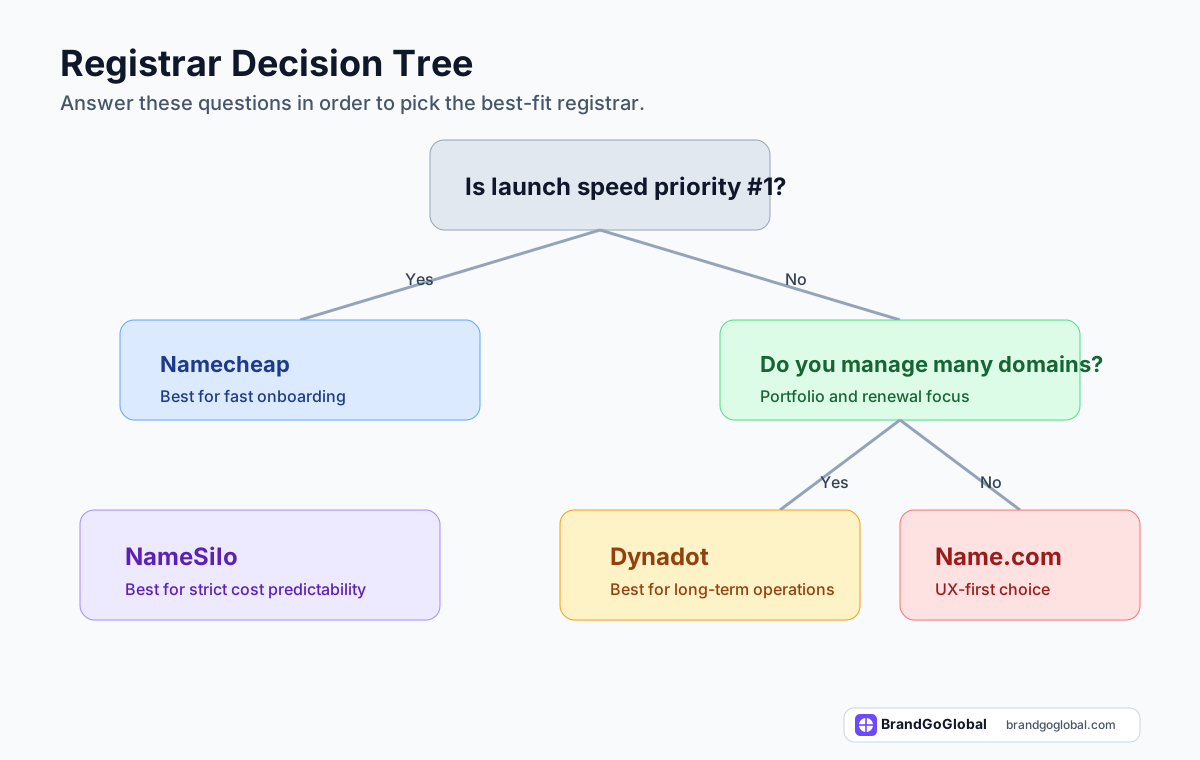
Figure: Decision path by launch speed, portfolio scale, and cost control priority.
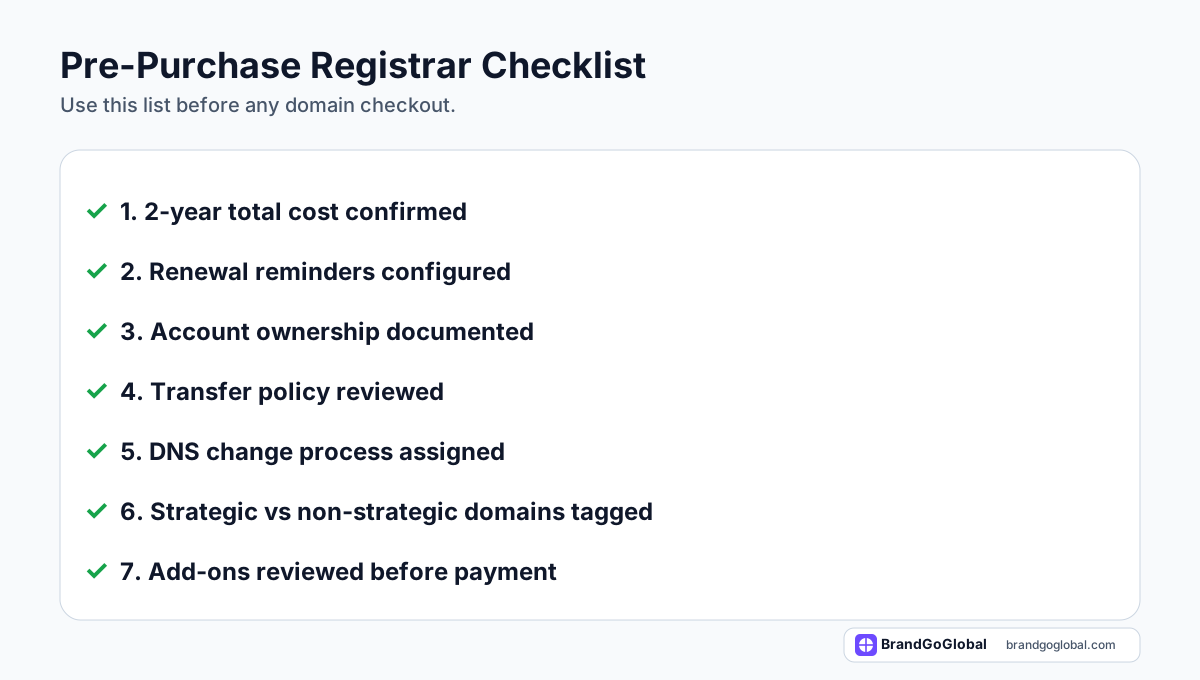
Figure: Final checklist before checkout to reduce renewal and transfer mistakes.
Choose a Registrar with a Cost-Control Lens
Run your actual domain list through our comparison flow before buying.