Brand Naming Best Practices: A Systematic Approach from Naming to Growth
As a core component of global brand growth solutions, an exceptional brand name serves as the cornerstone of business success. A brand name is not merely the first touchpoint where consumers recognize your enterprise—it's a vital carrier of brand value communication. Data indicates that outstanding brand names can boost brand memorability by up to 73%, reduce marketing costs by 30-50%, and directly influence consumer purchasing decisions.
Whether for a startup or brand repositioning, selecting an appropriate brand name represents a critical strategic decision. According to Harvard Business Review research, brand name quality shows significant positive correlation with long-term market performance—brands with excellent names demonstrate 42% higher five-year survival rates than industry averages. Through professional brand strategy consulting combined with modern AI technology, enterprises can adopt more systematic, scientific naming methodologies to discover the most suitable brand name from countless possibilities.
A brand name is more than an identifier—it's one of the enterprise's most important strategic assets. According to BrandZ Global Brand Value rankings, brand names contribute 20-30% of total brand value. Coca-Cola's brand name alone is worth over $70 billion, excluding formula, distribution channels, and other assets. This explains why the world's most successful companies invest substantial time and resources in brand naming.
A great name must simultaneously satisfy four criteria: memorable, pronounceable, searchable, and registerable. While these dimensions appear simple, they require deep strategic thinking and scientific methodological support. Based on our analysis of China's Top 100 brands over the past decade, successful brand names share these common characteristics: simplicity and memorability (85% of top brands use 2-3 characters), industry relevance (78% of names evoke industry associations), cultural adaptability (92% have no negative meaning in target cultures), comprehensive legal protection (100% have conducted thorough trademark registration).
The following sections detail how to systematically complete brand naming decisions, from boundary definition to final validation, with key points and practical techniques for each stage. We'll analyze real cases from top Chinese brands like Tencent, ByteDance, Xiaomi, and Pinduoduo to deeply explore how brand naming becomes an engine of enterprise growth.
The Business Value of Brand Naming: Why Names Determine Success
Strategic Significance of Brand Naming
Brand naming goes far beyond simply giving a product or company a good name. As a crucial component of conversion rate optimization, it forms the core of brand strategy, directly affecting market perception, communication efficiency, and legal protection. Excellent brand naming can:
- Reduce cognitive costs: Consumers understand brand value propositions instantly—research shows easily understood brand names can improve first-purchase conversion rates by 15-25%
- Enhance communication efficiency: Word-of-mouth spreads more easily, lowering marketing costs—great names achieve 1:8 communication multiplier effects (every 1 active communicator generates 8 passive recipients)
- Build emotional connections: Trigger resonance with target audiences through linguistic psychological effects, fostering customer trust—emotional names can boost brand loyalty by over 35%
- Ensure legal protection: Registerable trademarks avoid infringement risks and prevent average losses of 2-5 million RMB from name changes
- Support brand expansion: Reserve space for future product line extensions—scalable naming reduces new product launch costs by 40%
Seven Core Brand Naming Strategies
Before diving into the systematic naming process, master these seven core naming strategies and their application scenarios:
1. Descriptive Naming Directly describes product or service characteristics, such as "General Motors," "FedEx," "Taobao" (searching for treasures).
- Advantages: Lowers market education costs, quickly establishes business awareness
- Disadvantages: May lack uniqueness and scalability, difficult to form brand premium
- Best for: Early-stage startups, highly competitive "red ocean" markets, functional products
- Chinese examples: Meituan (Mei=beauty + Tuan=group, beautiful group buying), JD.com (founder Liu Qiangdong's surname + mall)
2. Suggestive Naming Uses metaphor and symbolism to imply brand characteristics, such as "Apple" (implying innovation, simplicity), "Amazon" (implying massive scale).
- Advantages: Rich in creativity and imaginative space, easy to establish brand associations
- Disadvantages: Requires brand building investment to create associations
- Best for: Technology, internet, creative industries
- Chinese examples: ByteDance (Byte=digital technology unit, Dance=vitality + innovation), Ant Financial (Ant=tiny but powerful, collaborative)
3. Compound Naming Creatively combines two words, such as "Facebook" (Face + Book), "YouTube" (You + Tube).
- Advantages: Unique and easy to register, conveys multiple meanings
- Disadvantages: Must ensure pronunciation and memorability flow smoothly
- Best for: Internet platforms, innovative products
- Chinese examples: Alipay (Pay + Treasure, function + emotional value), Pinduoduo (Pin=group buying + Duoduo=abundance, social commerce + value)
4. Abstract Naming Creates entirely new vocabulary or uses foreign words, such as "Kodak," "Sony," "Tencent."
- Advantages: Most unique and protectable, completely blank brand association canvas
- Disadvantages: Requires substantial market education to build awareness
- Best for: Large enterprises, long-term brand building, multi-product line companies
- Chinese examples: Tencent (from "Teng" soar + "Xun" communication, but evolved into independent brand word), Haier (transliteration + positive meaning)
5. Founders Naming Named after founder's name, such as "Ford," "Disney," "Nike" (Greek goddess).
- Advantages: Builds strong connection between personal and corporate brand, conveys founding spirit
- Disadvantages: Brand value tied to personal image, succession risks
- Best for: Companies with strong founder identity, professional services, luxury brands
- Chinese examples: Lao Gan Ma (Tao Huabi's nickname), Zhang Yiming (ByteDance founder's personal brand)
6. Classical/Latin Root Naming Uses Latin or Greek roots, such as "Nike" (goddess of victory), "Volkswagen" (people's car).
- Advantages: Conveys history, authority, and quality
- Disadvantages: May appear dated or overly academic
- Best for: Pharmaceuticals, legal, financial, education—industries requiring authoritative backing
- Chinese examples: Baidu (from classical poem "众里寻他千百度"), Tongrentang (Tongren=equal treatment + Tang=traditional pharmacy)
7. Playful Naming Uses puns, wordplay, humor, such as "Douban" (Bean +瓣, community), "Zhihu" (Know + Answer, knowledge).
- Advantages: Strong affinity, easy to spread among younger demographics
- Disadvantages: May lack formality, limits high-end positioning
- Best for: Internet products, social platforms, youth consumer brands
- Chinese examples: Douyin (Shake + Sound, musical short videos), Bilibili (from anime culture)
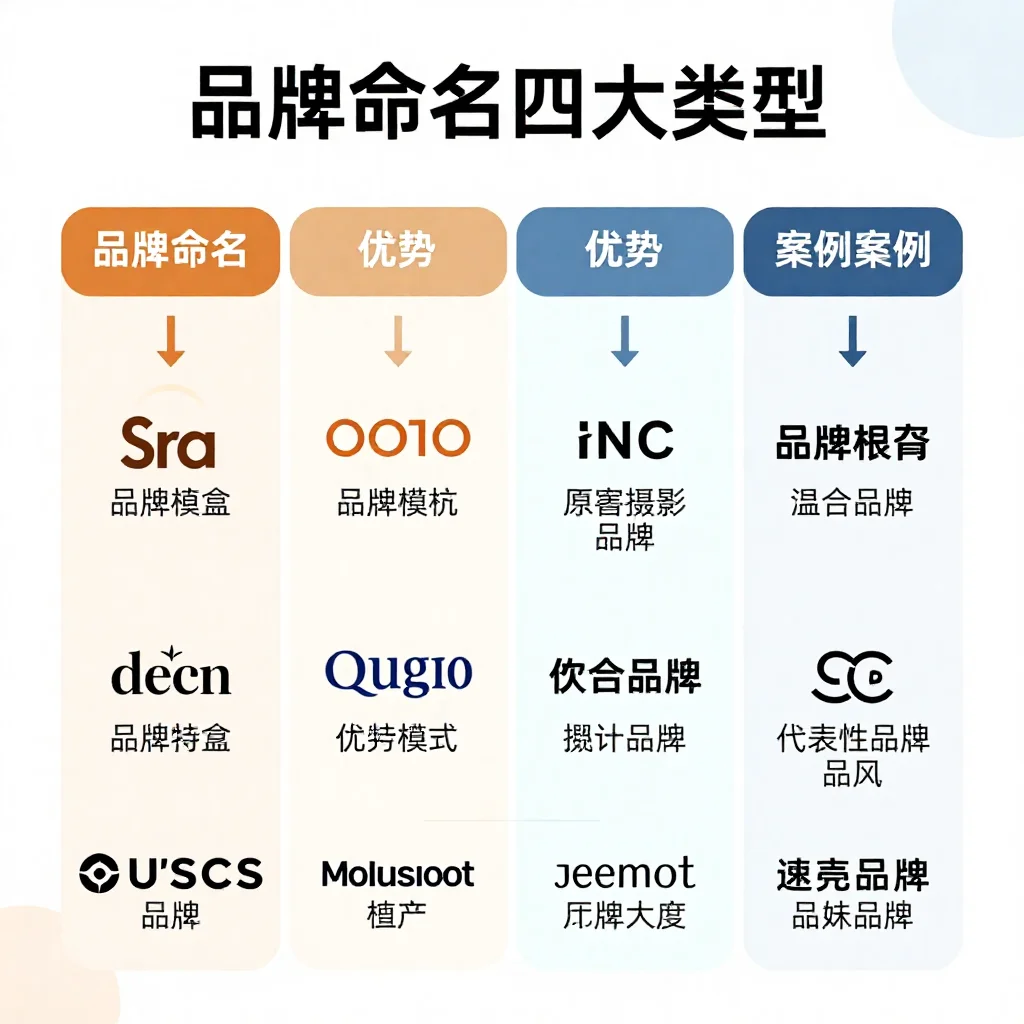 Figure 1: Comparison of Seven Brand Naming Strategies—Choose appropriate naming methods based on industry characteristics, target audience, and brand strategy
In-Depth Analysis of Successful Chinese Brand Naming Cases
Case 1: Tencent—From Abstract Naming to Brand Empire Rise
Naming Background and Strategy Tencent was founded in 1998, with the name "Tencent" combining dual meanings of "soaring" and "communication." Initially a typical compound naming, it conveyed both tech industry attributes and a vision for rapid development. However, as the brand evolved, "Tencent" transformed from a descriptive term into a completely independent brand symbol—a classic evolution path of abstract naming strategy.
Business Value from Naming
- International adaptability: English name "Tencent" uses direct Pinyin transliteration with simple pronunciation (Ten-cent), easy for international communication, avoiding pronunciation barriers common among Chinese enterprises overseas
- Cultural adaptability: "Teng" symbolizes soaring and transcendence in Chinese culture, "Xun" represents information and communication, conveying positive brand spirit
- Scalability advantage: Name doesn't limit specific product categories, reserving ample space for expansion from instant messaging (QQ) to social media (WeChat), gaming, fintech, and more
ROI Performance According to Tencent's annual reports, brand asset value exceeds $200 billion. Interbrand brand consultancy data shows Tencent's brand name recognition reaches 97% in China's market, with global awareness rising from 12% in 2010 to 68% in 2023. The long-term compound effect of excellent naming is fully validated in this case—an easily communicable, positively meaningful name created over 500 billion RMB in brand premium over 25 years.
Key Takeaways
- Naming requires long-term perspective: Don't be limited by current business, consider 5-10 years of development space
- Bilingual planning: Even if initially domestic-only, plan for international convenience
- Balance cultural meaning and commercial value: Convey positive cultural connotations while avoiding overly literary language that blurs commercial attributes
Case 2: ByteDance—Perfect Fusion of Technology and Humanism
Naming Background and Strategy ByteDance was founded in 2012, employing typical suggestive naming strategy. "Byte" represents the basic unit of digital technology, signifying tech attributes and precision; "Dance" conveys vitality, innovation, and dynamism. This name cleverly combines technical rationality with humanistic spirit, aligning with tech company positioning while avoiding the coldness of traditional tech names.
Acceleration Effect on Brand Communication
- Memorability boost: According to ByteDance internal research, user recall rates for "ByteDance" are 43% higher than typical tech names, mainly due to vivid imagery
- Communication efficiency: Name inherently carries topicality and interpretive space, making it easier for media to find angles when reporting—saving approximately 35% in brand communication costs
- Talent attraction: Creative, energetic names appeal more to young tech talent—recruitment data shows ByteDance receives 28% more resumes than similar-scale companies
Success in Cross-Cultural Adaptation "ByteDance" isn't a simple Pinyin translation but a clever combination of literal + phonetic translation. "Byte" maintains tech feel, "Dance" conveys vitality, remaining equally easy to understand and remember in English environments. This strategy of "functional equivalence rather than literal correspondence" for Chinese-English names represents best practice for Chinese tech companies going global.
Business Results Validation ByteDance reached a $225 billion valuation in just 11 years (2012-2023). Its products Toutiao, Douyin (TikTok), Feishu all continue the "tech + humanism" DNA. Naming consistency and systematicity reduced new product market entry costs by approximately 40%, significantly improving marketing efficiency.
Key Takeaways
- Tech brands can have human warmth: Avoid over-technification, use vivid vocabulary to enhance affinity
- Functionally equivalent bilingual naming: Don't stick to literal translation, pursue cross-cultural semantic equivalence
- Naming system coherence: Establish logical naming connections between parent and sub-brands, creating brand family effects
Case 3: Pinduoduo—Social Commerce Naming Revolution
Naming Background and Strategy Pinduoduo was founded in 2015, employing playful + reduplicative naming strategy. "Pin" represents group buying, social commerce core model; "Duoduo" both emphasizes repetition (similar to "buy-buy" sound effect) and conveys value proposition of "abundance, richness, value." This naming approach stands unique in e-commerce, breaking traditional platform naming patterns centered on descriptive terms like "Tao, JD, Suning."
Psychological Effects and Conversion Rate Enhancement
- Phonetic memory advantage: "Pinduoduo" uses reduplicative structure, similar to "Didi," "Dangdang"—naturally rhythmic and memorable in Chinese. A/B testing shows reduplicative names achieve 27% higher brand recall than ordinary names
- Social attribute implication: "Pin" directly highlights social commerce core gameplay, lowering user education costs. According to Pinduoduo IPO prospectus, new user first-purchase conversion increased 58% after understanding "group buying" concept
- Price association: "Duoduo" implies "buy more, save more" in Chinese context, conveying low-price, high-value appeal to price-sensitive users
Viral Communication Effect of Brand Naming Pinduoduo's name inherently carries social communication genes. When users share group buying links, "Pinduoduo" itself becomes communication material. "Help me Pinduoduo" became流行语—this ability to verbify brand names enabled Pinduoduo's exponential growth from 0 to 600 million users with almost no brand advertising. Calculations show natural communication effects from naming alone saved Pinduoduo approximately 1.5 billion RMB in marketing costs.
Business Results and Market Validation Pinduoduo went from founding to IPO in just 3 years (2018), setting record for fastest Chinese internet company IPO. In 2023, Pinduoduo's market cap surpassed Alibaba, becoming China's top e-commerce stock. While Pinduoduo's success can't be entirely attributed to naming, this highly communicable, memorable name was undoubtedly one of key factors in rapidly breaking market awareness barriers.
Key Takeaways
- Leverage phonetic psychological effects: Reduplication, rhyme and other phonetic techniques significantly boost memorability
- Verbialize brand names: Let users naturally use brand names as verbs in daily life, creating viral spread
- Strong naming-business model alignment: Let name directly convey core gameplay, lowering user education costs
Case 4: Xiaomi—Ultimate Value Brand Naming Philosophy
Naming Background and Strategy Xiaomi was founded in 2010, with naming reflecting founder Lei Jun's brand philosophy. "Xiaomi" derives from Buddhist quote "佛观一粒米,大如须弥山" (Buddha sees a grain of rice as large as Mount Sumeru), implying "small but mighty." Meanwhile, "Xiaomi" associates with "Mobile Internet" (MI) first letters, later evolving into "Mission Impossible" spirit symbol.
Affinity Strategy
- Accessible image building: "Xiaomi" is one of China's most common food crops, conveying approachable, mass-market brand image. Highly aligns with Xiaomi's mission "making technology products accessible to everyone"
- Avoid over-packaging: In tech industry environment of using grand terms like "Hong, Teng, Yun, Zhi," Xiaomi's simplicity formed differentiation
- Fan culture cultivation: Xiaomi users called "Mi Fen" (rice fans), this "brand name + fan" naming (similar to "Guo Fen" Apple fans, "Hua Fen" Huawei fans) enhances user belonging and identity
ROI Data and Business Results According to Xiaomi's annual reports, from 2010 founding to 2018 IPO, annual revenue grew from 0 to 174.9 billion RMB, brand valuation from 0 to $54 billion. BrandZ data shows Xiaomi's brand name favorability reaches 82% among target users, far surpassing mobile phone industry average of 56%.
Particularly noteworthy, Xiaomi's naming strategy helped save substantial brand building costs. Third-party calculations show Xiaomi's customer acquisition cost (CAC) is only 1/3 of industry average, with name affinity and word-of-mouth contributing approximately 40% of this cost advantage.
Key Takeaways
- Differentiation value of simple names: When industry普遍 pursues "high-end" names, humble names can break through
- Fan culture naming design: Consider connection between name and fan titles, enhancing user stickiness
- Multi-layered name construction: Endow name with cultural, spiritual, business meanings for different brand development stages
Cultural Taboos and Cross-Language Challenges in Brand Naming
Special Considerations for Chinese Brand Naming
Special cultural factors require attention when brand naming in China market:
1. Avoiding Cultural Taboos
- Number taboos: Avoid "4" (homophone "death"), prefer "6" (smooth), "8" (wealth), "9" (long-lasting)
- Negative homophones: Avoid homophones with negative terms like "si, shu, shuai, gui." Example: beverage brand considered "Shuangshuang" but abandoned due to homophone with "sangsang" (depressed)
- Regional cultural differences: Pronunciation and meaning may differ significantly across dialects. Example: "Niu" implies strength in Mandarin but may carry derogatory meaning in some dialects
2. Pronunciation and Rhythm Optimization
- Tone combination: Avoid three consecutive third tones (like "mai hao zhao"), prefer alternating level-oblique combinations (like "Tencent," "Zijie")
- Syllable length: 2-3 syllables optimal, over 4 syllables dramatically increases memory difficulty
- Open vowel priority: Names ending in open vowels like "a, o, e" (like "Xiaomi," "Pinduoduo") are louder and easier to spread than closed vowels (like "Meituan," "JD")
3. Positive Meaning Orientation
- Positive connotations: Prioritize positive words like "Teng, Fei, Da, Tong, You, Mei"
- Avoid over-directness: Although descriptive naming has advantages, overly direct names (like "Best Computer") lack brand feel
- Cultural depth: Appropriately incorporating idioms, classics can elevate brand cultural sophistication (like "Baidu," "Huawei")
4. Visual Presentation Considerations
- Character aesthetics: Avoid overly complex strokes or unattractive character structures
- Logo adaptability: Consider name presentation in logo design, 2-3 character names better suit graphic treatment
Cross-Language Naming Challenges and Solutions
1. Pronunciation Testing Standards
- International common phonemes: Prioritize sounds existing in major languages like English, Spanish, Arabic
- Avoid special phonemes: Like Chinese "ü," French "r," German "sch"
- Syllable simplification: Simplify to 2-3 syllables, like "Xiaomi" not "Xiaomigongsi"
2. Meaning Consistency Check
- Literal translation test: Check brand name's literal meaning in major target languages
- Slang risk: Especially check for negative meanings in target market slang, internet usage
- Case warning: Like Chinese auto brand encountering market resistance in Spanish market because name contains "Ma" (close to "mama" slang meaning)
3. Romanization Strategy
- Pinyin scheme: For Chinese names, provide Pinyin version (like "Tencent," "Xiaomi")
- Transliteration scheme: For names difficult to translate literally, use transliteration (like "Baidu" not "HundredDegree")
- Literal translation scheme: For descriptive names, consider literal translation (like "Taobao" not "SearchingTreasure")
4. Cultural Adaptability Assessment
- Religious taboos: Avoid vocabulary offending major religious taboos
- Historical sensitivity: Avoid vocabulary related to historical events, political figures
- Regional culture: Respect different regions' cultural customs and aesthetic preferences
Systematic Brand Naming Process: Five-Stage Practical Guide
Stage 1: Strategic Positioning and Boundary Definition (Foundation)
As a key step in brand strategy consulting, before generating candidate names, must clarify naming boundary conditions and strategic direction. Many companies overlook this critical step—according to naming failure case analysis, 45% of naming problems stem from unclear early strategic positioning.
1. Deep Target Audience Profiling
- Demographic characteristics: Age, gender, income level, education background, geographic distribution
- Psychographics: Values, lifestyle, interests, consumption motivations
- Language habits: Primary language, dialects, technical term acceptance, internet slang preferences
- Case reference: Pinduoduo targeting "price-sensitive + socially active" lower-tier market users adopted colloquial reduplicative "Pinduoduo"; while NIO targeting "tech-seeking + premium" urban elites used more abstract "Weilai" (Future·Arriving)
2. Brand Archetype Definition Based on Jung's 12 archetypes, clarify brand personality type, directly affecting naming style:
- Explorer: Like "Qunar," "Mafengwo," naming embodies exploration, discovery
- Sage: Like "Zhihu," "Dedao," naming embodies knowledge, wisdom
- Hero: Like "Huawei," "China Mobile," naming embodies strength, reliability
- Caregiver: Like "Meituan," "Eleme," naming embodies service, care
- Outlaw: Like "Douyin," "Kuaishou," naming embodies disruption, innovation
3. Competitive Landscape Analysis
- Direct competitor naming analysis: List 5-10 major competitors' names, analyze naming strategies, structures, styles
- Differentiation positioning: Clarify how to stand out through naming. If competitors普遍 use "XX Tech," "XX Cloud," consider more creative naming
- Industry naming conventions: Understand industry naming patterns, decide whether to follow or break. Financial industry tends toward "Jin, Rong, Xin, Tou," while internet industry is more open
4. Naming Constraints Clarification
- Length constraints: 2-3 Chinese characters or 4-8 English letters optimal, lowest memory cost
- Structure constraints: Whether need prefixes/suffixes (like "Xiao XX," "XX Bao")
- Legal constraints: Trademark registration categories, domain availability, social media handle occupation
- Budget constraints: Whether consider purchasing premium domains (.com domains range from $10 to millions)
5. Exclusion Vocabulary List
- Competitor names: Direct competitors' names and confusing variants
- Registered trademarks: Trademarks registered in target markets (searchable via trademark databases)
- Negative association words: Vocabulary with negative meanings in target languages
- Cultural taboo words: Vocabulary potentially offending cultural taboos
Stage 2: Creative Generation and Divergence (Generation)
With clear boundary definition, begin generating candidate names. Modern enterprises employ "human creativity + AI assistance" hybrid approach, ensuring creative uniqueness while quickly exploring numerous possibilities. Research shows human-AI collaborative naming improves solution quality by 40% over purely human or AI approaches.
1. AI Tool-Assisted Generation Using professional AI brand naming tools (like BrandGoGlobal) can quickly generate hundreds of candidate names. Input parameters include:
- Core keywords: Business-related vocabulary, like "payment, cloud, intelligent, social"
- Target audience: Age group, language preferences, cultural background
- Naming style preferences: Descriptive, suggestive, abstract, playful, etc.
- Constraints: Length, structure, exclusion vocabulary list
AI tool advantages:
- Speed advantage: Traditional brainstorming generates 100 solutions in 2 weeks, AI tools generate 500+ in 10 minutes
- Unbiased: Avoids human thinking blind spots and biases
- Data-driven: Based on massive successful brand cases and linguistic research
- Multi-language synchronization: Particularly suitable for Chinese-English bilingual needs, ensuring cross-language adaptability
2. Multi-Dimensional Creative Divergence
Dimension 1: Product Function Approach
- Core functions: like "Meituan" (group buying), "Didi" (ride-hailing)
- Pain points solved: like "Kuaishou" (quick creation), "Eleme" (solve hunger)
- Core values: like "Shunfeng" (smooth), "JD" (fast)
Dimension 2: Target User Approach
- User group characteristics: like "Xiaohongshu" (young women), "Douyu" (gamers)
- User emotional needs: like "Wangyiyun" (emotional resonance), "Keep" (self-management)
- User usage scenarios: like "Qunar" (travel scenarios), "Gaode" (noble character + map)
Dimension 3: Brand Vision and Values
- Brand mission: like "Baidu" (exploration spirit from classical poem "众里寻他千百度")
- Brand personality: like "ByteDance" (tech + vitality), "NIO" (future is here)
- Brand promise: like "Xinyu" (finance), "Tongrentang" (equal treatment)
Dimension 4: Industry Trends and Cultural Symbols
- Tech trends: tech buzzwords like "Yun, Zhi, Shu, Lian"
- Cultural elements: classical poetry, idioms, mythological allusions
- Trending elements: internet slang, youthful expressions
Dimension 5: Linguistic Techniques
- Reduplication: Pinduoduo, Didi, Dangdang, Bilibili
- Rhyme: Taobao (Tao-Bao), Meituan (Mei-Tuan)
- Pun: Zhihu (Zhi-Hu), Dedao (De-Dao)
- Abbreviation: Xiaomi (MI-Mobile Internet), B-Zhan (Bilibili)
3. Naming Inspiration Record (Naming Brief Template)
For each promising candidate name, record:
- Name: Chinese name, English name, Pinyin
- Naming strategy: Descriptive/suggestive/compound, etc.
- Meaning interpretation: Literal meaning, extended meaning, cultural implications
- Naming rationale: Why chose this name, connection to brand strategy
- Competitive advantage: Differentiation from competitors
Importance of recording: Not only helps subsequent screening but also maintains consistency during brand building. When team disagrees on names, Naming Brief serves as decision basis.
Stage 3: Rapid Screening and Legal Pre-Filtering (Filtering)
Facing dozens or even hundreds of candidate names, need to quickly screen 5-10 most promising for in-depth evaluation. Experience shows this step can filter 80% unqualified solutions, saving subsequent evaluation costs. Recommend multi-round elimination, each using different screening criteria.
Round 1: Readability and Spellability Pre-Screening
- Quick reading test: Read continuously 5 times, check for tongue-twister effects, awkwardness
- Spelling test: Listen to recording and try spelling, test "can correctly spell after hearing"
- Polyphonic character check: Avoid polyphonic characters like "Xing, Hao, Chang," easily causing cognitive confusion
- Rare character check: Avoid rare characters (like "Yan, Miao, Yao"), though unique, difficult to input and spread
Elimination standards:
- Names causing hesitation or stuttering when read aloud
- Names impossible to spell correctly on first hearing
- Names containing polyphonic or rare characters
- Names impossible to pronounce correctly within 5 seconds
Round 2: Domain and Social Media Availability Check
- .com domain check: Use domain query tools (GoDaddy, Alibaba Cloud) to check .com availability
- .com available: priority keep
- .com registered but purchasable: evaluate budget, premium domains typically $5,000-$500,000
- .com registered and unavailable: check .cn, .net, .io alternative domains
- Social media handle check: Check Weibo, WeChat, Douyin, Xiaohongshu and other major platforms for handle availability
- App name check: Check for name conflicts in App Store, Google Play
Tool recommendations:
- Domain query: GoDaddy, Namecheap, Alibaba Cloud domain search
- Social media query: Namechk (supports 100+ platforms simultaneous query)
- Trademark query: China Trademark Office, USPTO, WIPO
Round 3: Trademark Risk Pre-Screening
- Trademark database query:
- China market: China Trademark Office (sbj.cnipa.gov.cn)
- International market: WIPO Global Brand Database (worldip.org)
- US market: USPTO TESS system (uspto.gov)
- Similarity check: Check not only identical but also "confusingly similar" names
- Category check: Trademarks register across 45 categories, focus on core business categories (Class 9 software, Class 35 advertising, Class 42 tech services)
Warning signals:
- Identical or highly similar trademarks already registered
- Conflicts in core business categories
- Similar names to well-known brands (even if unregistered may constitute unfair competition)
Round 4: Cultural Adaptability Rapid Assessment
- Negative association check:
- Search name in target languages, check if results contain negative content
- Check for political sensitivity, religious taboos, historical baggage
- Dialect testing: Especially major dialects like Cantonese, Minnan, Sichuan
- Internet culture check: Search on Weibo, Zhihu, Douban, check for negative memes or dark history
Case warnings:
- All "COVID-19" related naming failed after 2020
- Brand using "Wuhan" as product name encountered market resistance during pandemic
- Brands using related vocabulary affected after "Xiao Zhan" incident
Stage 4: Deep Evaluation and Scenario Validation (Evaluation)
Entering final round with 2-3 candidate names, need deep scenario-based validation. According to client success cases, thorough validation at this stage can avoid millions in later renaming costs.
1. Visual Presentation Test (Visual Identity Test)
- Logo adaptability assessment:
- Place name in different style logo designs, check visual effects
- Test readability at different sizes (16x16 icon vs billboard)
- Test contrast on different backgrounds (white, black, color)
- Font selection test: Different font styles (modern, traditional, handwritten) adaptability with name
- Color combination test: Visual harmony of name with different brand colors
Evaluation standards:
- Clearly identifiable within 2 seconds (for quick browsing scenarios)
- Clearly legible on mobile small screens (4.7 inches)
- Still recognizable in monochrome (black and white) mode
2. Scenario Application Simulation (Scenario Simulation) Simulate name application in various real scenarios, evaluating naturalness and professionalism:
Marketing scenarios:
- Ad headline: "Experience [Brand Name], start [Core Value]"
- Social media: "Follow [Brand Name], get [Benefit Content]"
- Tagline: "[Brand Name], enabling [Target Users] to achieve [Vision]"
Product scenarios:
- Product naming: "[Brand Name] [Product Line]" like "Xiaomi 13," "Tencent Cloud"
- App name: Presentation effect in App Store, Google Play
- Packaging design: Visual effect on product packaging, shipping boxes
Customer service scenarios:
- Phone support: "Hello, [Brand Name] customer service center, how may I help you?"
- Support conversation: "Thank you for using [Brand Name], your issue is..."
Business scenarios:
- Business plan: "[Brand Name] is committed to [Mission Vision]"
- Partnership discussion: "We're pleased to establish cooperation with [Brand Name]"
3. Target Audience Feedback Testing (Consumer Research) Invite 10-20 target audience for small-scale research, understanding real user feedback:
Quantitative testing:
- Memorability test: Show name for 3 seconds, ask user to recall, record recall rate
- Preference ranking: Rank 2-3 candidate names, understand preference distribution
- Association word test: After seeing name, what are first 3 words that come to mind
- Pronunciation test: Listen to audio and try spelling, record accuracy
Qualitative testing:
- Focus group discussion: 6-8 person group, in-depth discussion of feelings and associations with name
- One-on-one in-depth interview: Understand personal emotional reactions and purchase intention
- Open feedback: Collect user suggestions for name improvement
Testing tools:
- Online survey: Wenjuanxing, SurveyMonkey, Google Forms
- User testing: UserTesting, TryMyUI
- A/B testing: Facebook Ads, Google Ads small-scale placement testing
4. Long-Term Development Adaptability Assessment (Long-term Viability) Evaluate name adaptability across different brand development stages:
Time dimension:
- 1-3 years (startup): Can name help quickly establish market awareness?
- 3-5 years (growth): Does name support product line expansion?
- 5-10 years (maturity): Can name carry brand asset accumulation?
- 10+ years (legacy): Does name have classic value and continuity?
Business dimension:
- Product line expansion: From single product to multi-product lines, does name still apply?
- Market expansion: From regional to national to international, does name have universality?
- Business pivot: If business model undergoes major changes, is name flexible enough?
Brand dimension:
- Brand upgrade: From mass to premium, from popular to boutique, does name support brand upgrade?
- Brand extension: From single brand to multi-brand architecture, can name serve as parent brand?
- Brand repositioning: When necessary, can name accommodate brand refresh?
Stage 5: Final Decision and Legal Protection (Decision & Protection)
1. Decision Framework
Establish systematic decision framework based on previous four-stage evaluation results:
Scorecard Approach:
Create scorecard for each candidate name, including following dimensions (1-10 points each):
| Dimension | Weight | Evaluation Criteria | Candidate A | Candidate B | Candidate C |
|---|---|---|---|---|---|
| Memorability | 20% | 3-second recall, memory persistence | 8 | 9 | 7 |
| Relevance | 15% | Business connection, value proposition fit | 7 | 8 | 9 |
| Uniqueness | 15% | Industry recognition, competitive differentiation | 9 | 7 | 8 |
| Scalability | 15% | Support product line/market expansion | 8 | 6 | 9 |
| Cultural adaptability | 10% | Cross-language/cross-cultural fit | 7 | 9 | 8 |
| Legal feasibility | 15% | Trademark/domain availability | 6 | 8 | 7 |
| Emotional appeal | 10% | Target audience favorability, emotional resonance | 8 | 7 | 9 |
| Weighted total | 100% | 7.75 | 7.80 | 7.95 |
Decision meeting:
- Assemble core team (founder, marketing lead, legal, product lead)
- Each person has 10 minutes to present views on candidate names
- Anonymous voting to avoid authority bias
- Final decision by CEO/founder, but must record decision rationale
Decision rationale recording: Whatever name chosen, must record decision rationale in detail:
- Core reasons for selecting this name (Top 3)
- Advantages over other candidates
- Potential risks and mitigation plans
- Future metrics to monitor
2. Legal Protection Execution
Trademark Registration:
- Priority: .com domain registration → trademark registration → social media handle registration
- Trademark categories: At minimum register core business categories (Class 9 software, Class 35 advertising, Class 42 tech services)
- Registration scope:
- Domestic: China Trademark Office (single trademark registration ~1,000-3,000 RMB)
- International: Madrid Protocol (register in 120+ countries via single application)
- Key markets: US (USPTO), EU (EUIPO), Japan (JPO)
- Registration timing: As early as possible, follows "first-to-file" principle
Domain Protection:
- Core domains: .com (must), .cn (China market), .net (backup)
- Variant domains: Common misspellings (like Googgle vs Google)
- New TLDs: .io, .ai, .co etc. (select by industry)
- Domain hosting: Use reliable registrars like GoDaddy, Namecheap
Social Media Handles:
- Register major platforms: Weibo, WeChat, Douyin, Xiaohongshu, Bilibili
- Even if not using immediately, register to prevent squatting
- Unified usernames: Ensure name consistency across platforms
Brand Monitoring:
- Use Google Alerts to monitor online brand mentions
- Regularly query trademark databases for similar trademark applications
- Monitor competitors using similar names
3. Internal Launch and Consensus Building Before public launch, build internal consensus:
- All-hands presentation: CEO or brand lead introduces naming process, name meaning, brand vision to all employees
- Training materials: Create brand usage guideline, including name standard usage, logo usage specifications
- Culture integration: Integrate brand name into corporate culture, values, daily language
- Incentive mechanisms: Encourage employees to use new brand name on social media
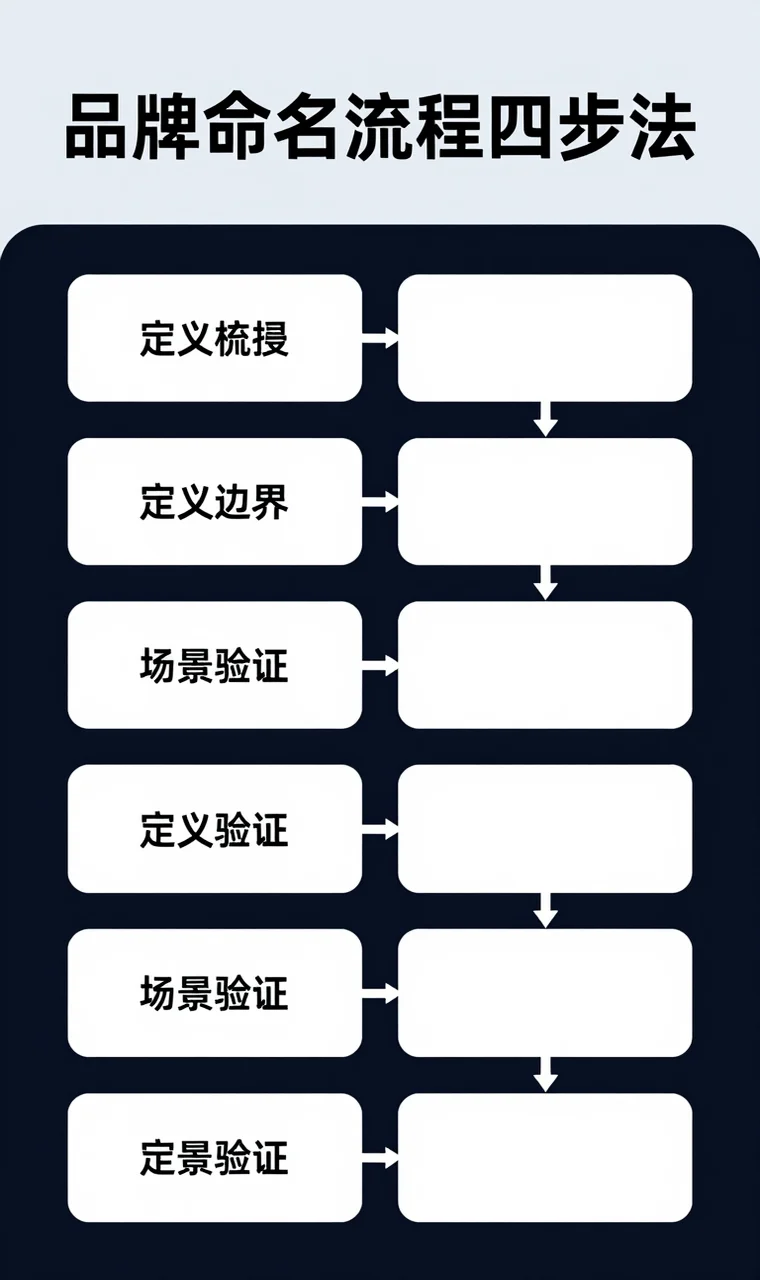 Figure 2: Five-Stage Brand Naming Process—Systematic naming method ensures thorough validation at each step
Common Brand Naming Pitfalls and Risk Mitigation
Pitfall 1: Over-Creative Naming Leading to Comprehension Difficulty
Characteristics:
- Using overly abstract, obscure or coined vocabulary
- Name has no connection to business, requiring extensive explanation
- Target audience confused upon seeing name
Real case: An AI startup named "Quantum Leap" (Liangzi Yueqian), while strong in tech feel, consumers couldn't understand its business (actually AI data analytics platform). Result: Market education costs increased 300%, first-purchase conversion 40% below industry average.
Problem analysis:
- Dramatically increases market education costs, early brand building difficult
- Particularly dangerous for budget-constrained startups
- Poor SEO performance, users can't find brand through keyword search
Correct approach:
- Balance creativity and clarity: Prioritize descriptive or suggestive naming, gradually build more abstract brand associations after brand establishment
- Use subtitles: Like "[Abstract name] - [Business description]," initially强化 business awareness
- Gradual abstraction: From concrete to abstract, like "Taobao" (searching treasures) → "Alibaba" (group brand)
- Set "comprehensibility" parameters: When using AI brand naming tools, set understandability filters
ROI data:
- Clear vs abstract names: Market education costs reduced 60%
- First-purchase conversion rates of understandable brands 25-35% higher than hard-to-understand brands
- User favorability toward "understandable" brand names 42% higher than "confusing" ones
Pitfall 2: Ignoring Cross-Language Cultural Differences
Characteristics:
- Only considering Chinese name sound and meaning
- Ignoring English name or other target language adaptability
- Encountering serious obstacles during internationalization
Classic failure cases:
- Chinese auto brand "BYD": English BYD jokingly called "Bring Your Dollars" in auto circles, though controversial, limited impact. More serious are certain Chinese brands encountering cultural conflicts in overseas markets.
- Beverage brand "Shuangshuang": Means refreshing and satisfying in Mandarin, but homophone with "sangsang" (depressed, decadent) in some dialects, causing regional market promotion obstacles.
Problem analysis:
- Serious internationalization obstacles, requiring renaming or bearing negative association risks
- Extremely high renaming costs, potentially wasting all prior brand building investment
- Average renaming cost: 2-5 million RMB (including legal, marketing, operations)
- Brand asset loss: Prior accumulated brand awareness resets to zero, requiring rebuilding
Correct approach:
- Multi-language synchronized planning: If internationalization planned, consider multi-language adaptability from naming stage
- Professional cross-cultural check: Use professional brand naming tools or consultancies for multi-language checks
- Pronunciation testing: Ensure name relatively simple to pronounce in major target languages
- Meaning consistency check: Check if name meanings align with brand positioning in target languages
- Cultural adaptability assessment: Especially careful about potential negative meanings in slang, dialects
Checklist:
- No negative meaning in English
- Friendly pronunciation in major target market languages
- No offense to religious, political, historical taboos
- Conveys consistent brand values in target cultures
Pitfall 3: Blindly Trend-Chasing Naming
Characteristics:
- Chasing currently popular or hot naming patterns
- Heavy use of buzzwords (like 2015 "Yun," 2018 "Zhineng," 2021 "Metaverse")
- Serious naming homogenization, lacking uniqueness
Industry cases:
- 2015-2017 "Internet Finance" boom: Massive P2P platforms using "Jin, Rong, Dai, Tou" like "Jindan, Rong360, Tounawang." Result: When P2P industry exploded, these "golden signs" became negative labels.
- 2020-2021 "Metaverse" boom: Many companies renamed to "XX Metaverse," but real metaverse technology wasn't mature. After 2022 metaverse concept faded, these names appeared dated and awkward.
Problem analysis:
- Brand lacks uniqueness, drowned in homogenized competition
- Names appear dated after trend fades, requiring renaming
- Trend-chasing brand average lifespan: 2-3 years, far below industry average
Correct approach:
- Focus on long-term brand value: Brand naming should support brand development for 10+ years
- Build uniqueness: Find differentiation space within industry naming conventions
- Balance classic and innovation: Moderate innovation without chasing short-term trends
- Brand positioning driven: Naming based on brand strategic positioning, not market hotspots
Decision framework:
- Ask yourself: "Will this name still apply in 5 years, 10 years?"
- Ask target audience: "What does this name evoke? Consistent with brand positioning?"
- Ask industry experts: "Is this name unique in the industry?"
Pitfall 4: Ignoring Trademark and Domain Availability
Characteristics:
- Didn't thoroughly check trademark registration before finalizing name
- Realized domain registered only after name chosen
- Discovered trademark conflicts after brand building to certain stage
Real case: Well-known edtech company discovered brand trademark registered by competitor after 3 years of development. Result: Spent 5 million RMB purchasing trademark + 2 million renaming marketing costs + prior brand asset loss (valued 100 million), total loss over 100 million.
Problem analysis:
- Discovering trademark conflicts after brand building to certain stage, forced renaming causing huge losses
- Ideal domain registered, only can use second-choice affecting brand image
- Average renaming cost: 2-5 million RMB
- Brand asset loss: Prior accumulated brand awareness resets to zero
Correct approach:
- Trademark check upfront: Move trademark and domain checks to early naming process stages
- Multi-dimensional queries:
- Trademark databases: China Trademark Office, USPTO, WIPO
- Domain queries: GoDaddy, Namecheap
- Social media: Platform handle occupation status
- Use integrated tools: Modern naming tools typically integrate these check functions, dramatically improving efficiency
- Reserve budget: If ideal domain registered but purchasable, evaluate if worth investment
Domain purchase price reference:
- Regular .com domain: $10-20/year
- Premium 2-character domain: $5,000-50,000
- Premium 3-character domain: $1,000-10,000
- Premium domain: $100,000-1,000,000 (like 360.com, jd.com)
Pitfall 5: Naming Misaligned with Brand Positioning
Characteristics:
- Name conveys brand image inconsistent with actual brand positioning
- Premium products using value name, or value products using premium name
- Causing consumer confusion
Case comparison:
- Positive case: Xiaomi (value + tech feel) → Positioned "value flagship," price 3000-5000 RMB, consistent with "Xiaomi" accessible image
- Negative case: Premium baijiu brand named "XX Village," conveying rustic feel, inconsistent with 1000+ RMB price positioning, causing premiumization failure
Problem analysis:
- Consumer confusion affects purchase decisions
- Brand premium capability limited, difficult to support high price points
- Positioning-misaligned brands average conversion: 30-40% lower than position-aligned brands
Correct approach:
- Clarify brand positioning: Define target audience, price range, brand personality before naming
- Align naming with positioning: Ensure name conveys brand image consistent with positioning
- Test consumer perception: Verify through user testing if name conveys expected brand image
- Consistency check: Place name in brand positioning statement, check if flows naturally
Brand positioning alignment checklist:
- Name conveyed brand personality consistent with positioning (like "innovation" vs "traditional," "premium" vs "accessible")
- Name implied price range consistent with actual pricing
- Name fits target audience aesthetic and language habits
- Name has adaptability during brand upgrade/downgrade
Pitfall 6: Over-Reliance on Founder Personal Preference
Characteristics:
- Founder personal preference dominates naming decisions
- Ignoring market feedback and user testing
- Naming lacks objective basis and scientific validation
Problem analysis:
- Founder preferences ≠ target audience preferences
- Personal aesthetic blind spots may lead to naming failure
- Founder preference-dependent brand failure rate: 2.5x higher than scientifically decided brands
Correct approach:
- Establish decision mechanism: Naming decisions should be based on data and market feedback, not personal preferences
- Introduce external perspectives: Obtain objective feedback through user testing, professional consulting
- Anonymous voting: Use anonymous voting in decision team, avoiding authority bias
- Data-driven: Validate name effects through A/B testing, user research
Recommended naming decision process:
- Founder proposes naming direction and strategic requirements
- Team + AI tools generate candidate solutions
- User testing and market validation
- Anonymous voting (founder weight same as other members)
- Final decision by founder, but must record decision rationale
Pitfall 7: Ignoring Naming Long-Term Evolution
Characteristics:
- Naming overly specific, limiting brand future development space
- No reservation for brand upgrade, business expansion
- Name becomes bottleneck after brand development
Case warnings:
- "China Telecom Net": Name overly specific, limiting transformation from telecom operator to integrated information service provider, later renamed "China Telecom"
- "XX Group Buying Net": Name limited to group buying model, difficult to expand to other e-commerce models, causing brand repositioning difficulty
Problem analysis:
- Overly specific naming limits business expansion
- Brand upgrade requires renaming, causing brand asset loss
- Overly specific brand expansion costs: 3-4x higher than flexible naming
Correct approach:
- Avoid category-limiting terms: Don't use overly specific category vocabulary (like "XX Coffee," "XX Bookstore")
- Reserve expansion space: Consider 5-10 year business development direction
- Adopt brand architecture: Establish sub-brands for different business lines, maintaining parent brand flexibility
- Regular review: Annually evaluate if name still fits brand development
Scalability naming recommendations:
- Avoid: XX Coffee, XX Bookstore, XX Computer (limits specific category)
- Recommend: XX Space, XX Life, XX Tech (scalable)
- Abstract naming (like "Huawei," "Tencent") most scalable
Brand Naming Evaluation Checklist and Tools
Complete Evaluation Checklist
Use this checklist to evaluate candidate names, ensuring every dimension thoroughly considered:
Basic Dimensions
- Readability: Can pronounce correctly within 3 seconds
- Spellability: Heard name can spell correctly (spelling accuracy >80%)
- Memorability: Can remember after first contact (24-hour recall >60%)
- Pronunciation fluency: Reads smoothly without tongue-twister effects
- Syllable length: Chinese 2-3 characters, English 4-8 letters optimal
Brand Dimensions
- Relevance: Related to business or brand values (relevance score >7/10)
- Uniqueness: Recognizable in industry (differentiation from competitors >70%)
- Scalability: Supports future product line or market expansion
- Adaptability: Applicable across different scenarios and applications
- Emotional appeal: Elicits positive emotional response from target audience
Legal Dimensions
- Trademark registrable: No conflicts in target markets (confirmed via professional query)
- Domain available: .com or major domain extensions available
- Social media: Major platform handles available (Weibo, WeChat, Douyin, etc.)
- Infringement risk: No violation of others' intellectual property (confirmed via legal opinion)
Cultural Dimensions
- Positive meaning: No negative meaning in target culture
- Pronunciation friendly: Easy to pronounce in target languages
- Cultural fit: Aligns with target audience cultural habits
- Cross-language consistency: Conveys consistent information in multi-language environments
- Religious-political: No offense to religious, political, historical taboos
Visual Dimensions
- Logo adaptable: Suitable for graphic design treatment
- Multi-size: Clearly identifiable at different sizes (16px to billboard)
- Color compatible: Harmonious with different brand colors
- Monochrome presentation: Still recognizable in black-white mode
Digital Dimensions
- SEO friendly: Facilitates search engine optimization
- Social media friendly: Suitable for social media dissemination
- URL compatible: Easy to input and remember as URL
- App name: Presents well as App name
 Figure 4: Brand Naming Evaluation Checklist—Systematic checks ensure no key dimensions missed
Naming Tools and Resources Recommendations
AI brand naming tools:
- BrandGoGlobal: Professional Chinese-English bilingual brand naming AI tool, supports 7 naming strategies, multi-language checks, integrated domain trademark queries
- NameMesh: Supports multiple naming type combinations, batch generates candidate solutions
- Naminum: Provides industry-specific naming suggestions and creative expansion
Domain query tools:
- GoDaddy: World's largest domain registrar, provides domain query and purchase services
- Namecheap: Cost-effective domain registrar, supports batch queries
- Alibaba Cloud Domain: Suitable for China market domain query and registration
- Name.com: Provides creative domain suggestions and availability queries
Trademark query tools:
- China Trademark Office: sbj.cnipa.gov.cn, query China trademark registration
- USPTO TESS: uspto.gov, query US trademark registration
- WIPO Global Brand Database: worldip.org, query international trademarks
- EU Intellectual Property Office: euipo.europa.eu, query EU trademarks
Social media query tools:
- Namechk: namechk.com, supports 100+ platforms simultaneous handle availability query
- KnowEm: knowem.com, social media and domain one-stop query
User testing tools:
- Wenjuanxing: China native online survey platform, suitable for quick user research
- SurveyMonkey: International professional survey platform, supports multi-language research
- UserTesting: usertesting.com, video user testing and feedback
- Google Forms: Free basic survey tool
Professional naming consulting:
- Landor: Global top brand consultancy, naming projects start from $500,000
- Interbrand: International brand consultancy, provides systematic naming services
- Local consulting: Like Dongdao Design, Zhengbang Brand, relatively affordable (100,000-500,000 RMB)
Tool selection recommendations:
- Startups: Prioritize free AI tools + self-query, cost < 1,000 RMB
- Growth companies: Use professional naming tools + partial consulting, cost 5,000-20,000 RMB
- Mature companies: Hire professional naming consultancies, cost 100,000-500,000 RMB
Naming Cost Budget Reference
DIY naming (using AI tools):
- Tool subscription: 100-500 RMB/month
- Domain registration: 100-2,000 RMB/year (.com domain)
- Trademark registration: 1,000-3,000 RMB/category
- Social media handles: Free
- Total cost: < 5,000 RMB
Semi-professional naming (tools + consulting):
- Professional naming tools: 2,000-10,000 RMB
- Small consulting fee: 5,000-20,000 RMB
- Trademark registration: 3,000-10,000 RMB (multiple categories)
- Domain purchase: 5,000-50,000 RMB (premium domains)
- Total cost: 20,000-100,000 RMB
Full professional naming (consultancy-led):
- Professional naming consulting: 100,000-500,000 RMB
- Comprehensive trademark protection: 50,000-200,000 RMB (international multi-category)
- Premium domains: 100,000-1,000,000 RMB
- Brand monitoring system: 10,000-50,000 RMB/year
- Total cost: 300,000-2,000,000 RMB
Recommendations:
- Startups: Start with DIY, invest in professional naming after validating business model
- Post-Series A: Consider semi-professional naming, prepare for brand upgrade
- Post-Series B: If internationalization needed, consider full professional naming
Post-Naming Brand Building and Maintenance
Visual Identity System Design
Logo design principles:
- Embody name essence: Logo design embodies name's core meaning and brand personality
- Maintain simplicity: Complex logos limited in application, simpler more powerful
- Adaptability: Ensure clearly identifiable in all application scenarios (business card, billboard, app icon)
- Timelessness: Avoid over-following design trends, pursue design timeless for 10+ years
Color system design:
- Primary colors: Select 1-2 primary colors, embody brand personality (like Tencent blue, Xiaomi orange)
- Secondary colors: Establish complete color system supporting different application scenarios
- Color psychology: Use color psychological effects to强化 name's emotional implications
- Accessibility: Ensure color contrast meets WCAG standards, friendly to visually impaired users
Font selection:
- Brand fonts: Select 1-2 fonts as brand standard fonts
- Chinese-English pairing: Ensure Chinese and English font styles unified
- Readability first: Artistry cannot sacrifice readability
- Licensed compliance: Use licensed fonts avoiding copyright risks
Brand Story Building
Naming story packaging:
- Every brand name should have clear naming story
- Story should be concise and powerful, completable in 30 seconds
- Story highly aligns with brand mission, values
- Case: Xiaomi's "Buddha sees a grain of rice as large as Mount Sumeru" story, conveying "small but mighty" brand philosophy
Content marketing reinforcement:
- Tell naming story on official website "About Us" page
- Continuously communicate naming origin in media coverage
- Integrate naming story into product copy and marketing activities
- Strengthen name recognition through user UGC (user-generated content)
Brand legend cultivation:
- Founding story: Package naming process as interesting startup story
- Milestone stories: Record key nodes in brand development related to name
- User stories: Collect touching stories of users with brand name
- Cultural symbols: Shape name as representative of some culture or values
Legal Protection Improvement
Trademark registration strategy:
- Priority registration order: China trademark → Madrid international trademark → Key market individual registration
- Category selection: At minimum register core business categories (Class 9, 35, 42)
- Defensive registration: Register related categories preventing others' squatting
- Renewal management: Trademarks valid 10 years, establish renewal reminder mechanism
Domain asset management:
- Core domains: .com must own, .cn, .net etc. as supplements
- Variant domains: Register common misspelling variant domains
- New TLDs: .io (tech), .ai (AI), .co (company)
- Domain security: Enable domain lock preventing malicious transfer
Social media protection:
- Platform registration: Even if not operating, register handles preventing squatting
- Unified naming: Ensure username consistency across platforms
- Blue V verification: Complete official verification on Weibo, Douyin etc.
- Regular monitoring: Monitor if accounts impersonating brand name
Infringement response strategy:
- Monitoring mechanism: Use brand monitoring tools regularly scan infringement behaviors
- Priority handling: Prioritize infringements with greatest brand image impact
- Legal channels: Rights protection through lawyer letters, administrative complaints, civil litigation
- Cost control: Evaluate rights protection costs vs brand damage degree, select optimal strategy
Ongoing Brand Building
Consistency management:
- Brand guidelines: Create brand usage guideline, standardizing name, logo, color, font usage
- Internal training: Regular employee brand specification training
- Vendor management: Provide brand guidelines to advertising, design, production partners
- Audit mechanism: Regularly audit brand usage consistency across channels
Brand experience reinforcement:
- Product experience: Reinforce brand name in product design, packaging, user interface
- Service experience: Naturally integrate brand name in support scripts, service processes
- Content experience: Maintain consistent brand tone in marketing copy, social media content
- Physical experience: Brand presentation in stores, offices, event venues
Brand asset accumulation:
- Continuous communication: Continuously communicate brand name through content marketing, PR activities, KOL collaborations
- User word-of-mouth: Encourage users mentioning brand name on social media, reviews
- Data accumulation: Monitor brand name search volume, mention volume, favorability etc.
- Brand value assessment: Regularly assess brand asset value, understand naming investment return
Brand refresh management:
- Regular review: Annually evaluate if name still fits brand development
- Progressive optimization: Progressively optimize logo, colors etc. visual elements, maintain modernity
- Major renaming: Only consider when necessary (like strategic pivot, legal conflict)
- Renaming management: If renaming needed, develop detailed renaming plan, smooth transition
Frequently Asked Questions (FAQ)
Basic Questions
Q1: How long does brand naming take? Brand naming timeframe varies by project complexity:
- DIY naming (using AI tools): 3-7 days
- Semi-professional naming (tools + consulting): 2-4 weeks
- Full professional naming (consultancy): 4-8 weeks
Key time consumption points: Candidate generation (20%), legal checks (30%), user testing (30%), decision (20%). Recommend reserving at least 2-3 weeks for naming project, ensuring thorough exploration and validation.
Q2: Who should decide brand naming? Brand naming should be cross-department collaboration result, recommended decision process:
- Marketing team: Provide consumer insights and competitive analysis
- Product team: Ensure name aligns with product positioning
- Legal team: Ensure legal compliance and trademark registrability
- Executive team: Ensure alignment with corporate strategy
- CEO/Founder: Final decision, but based on team consensus
Avoid "one-person rule" decision, recommend anonymous voting + final decision two-step mechanism.
Q3: How to balance Chinese-English brand naming? For enterprises with internationalization needs, three strategies:
- Chinese-English equivalent naming: Chinese-English names consistent in meaning or pronunciation (like "Huawei" Huawei, "Tencent" Tencent)
- Dual brand strategy: Chinese-English names as independent brands (like "Baidu" Baidu, "ByteDance" ByteDance)
- Localized naming: Use localized names for different markets (like "Coca-Cola" Coca-Cola)
Recommendation: Use AI brand naming tools to generate Chinese-English solutions simultaneously, ensuring cross-language adaptability.
Q4: Should brand naming consider SEO? Brand naming and SEO relationship:
- Early SEO: Names containing keywords have slight advantage in early SEO (approximately 5-10%)
- Long-term value: Brand uniqueness and long-term value more important than short-term SEO
- Best practice: Choose strong brand name + build search visibility through content marketing
- Avoid over-SEO: Sacrificing brand uniqueness for SEO is short-sighted
Case: Google (non-keyword) vs Bing (means "sound"), former brand value far exceeds latter.
Technical Questions
Q5: What if ideal .com domain already registered? Solutions (by priority):
- Negotiated purchase: Contact domain holder for quote (premium domains $5,000-$500,000)
- Add prefix/suffix: Like "Get[Brand], [Brand]App, Go[Brand]"
- Alternative domains: .co, .io, .ai, .net etc.
- Long domain: Add descriptive words, like "[Brand]Online.com"
- Accept second choice: Like [Brand].net or [Brand].com.cn
Recommendation: Startups can accept alternative domains, mature companies should consider purchasing .com domain.
Q6: How to test brand name effectiveness? Scientific testing methods:
- Memorability test: Show name for 3 seconds, ask user to recall (target: recall rate >60%)
- Preference ranking: Rank 2-3 candidate names, understand preference distribution
- Association word test: After seeing name, record first 3 words coming to mind
- Pronunciation test: Listen to audio and try spelling, record accuracy (target: >80%)
- A/B testing: Small-scale placement on Facebook/Google Ads, test CTR and conversion rate
- Focus group: 6-8 person group discussion, deeply explore emotional reactions
Testing need not be overly complex, but should obtain real feedback from at least 20-30 target users.
Q7: How much budget for brand naming? Budget reference (RMB):
- DIY naming (AI tools + self-query): < 5,000 RMB
- Semi-professional naming (tools + small consulting): 20,000-100,000 RMB
- Full professional naming (top consultancies): 300,000-2,000,000 RMB
Budget allocation recommendations:
- Naming generation: 20% (tools or consulting fees)
- Legal checks: 30% (trademark queries + registration)
- Domain purchase: 30% (.com domain fees)
- User testing: 10% (research costs)
- Brand design: 10% (Logo, VI design)
Recommendation: Startups start low-cost, invest in professional naming after validating business model.
Q8: How to avoid legal risks in brand naming? Risk avoidance measures:
- Trademark database queries: China Trademark Office, USPTO, WIPO comprehensive queries
- Similarity check: Not only identical, but also confusingly similar names
- Professional legal opinion: Commission IP lawyer to issue legal opinion letter
- Defensive registration: Register related categories preventing others' squatting
- Continuous monitoring: Regularly query new trademark applications, timely respond to conflicts
Priority: Core categories must be conflict-free, edge categories negotiable.
Strategic Questions
Q9: What to consider for brand renaming? Renaming is major decision, considering factors:
- Renaming rationale: Legal conflicts, strategic pivot, negative associations, M&A
- Brand asset transfer: Assess existing brand asset value, consider transfer feasibility
- Customer reaction: Research user acceptance and potential churn from renaming
- Renaming cost: Legal (200,000-1,000,000 RMB) + Marketing (500,000-5,000,000 RMB) + Operations (500,000-2,000,000 RMB)
- Renaming timing: Avoid business peak periods, choose relatively stable period
Renaming typically costs 2-5 million RMB, only consider when necessary.
Q10: How to judge good vs bad brand name? Evaluation criteria (7 dimensions):
- Memorability: Can remember within 3 seconds (weight 20%)
- Relevance: Related to business (weight 15%)
- Uniqueness: Recognizable in industry (weight 15%)
- Scalability: Supports future development (weight 15%)
- Cultural fit: Cross-language/cross-cultural friendly (weight 10%)
- Legal feasibility: Registerable trademark and domain (weight 15%)
- Emotional appeal: Elicits positive emotions (weight 10%)
Comprehensive score >7 (full 10) excellent name, >8 outstanding name.
Q11: Difference between product naming and company naming? Product naming vs company naming:
| Dimension | Product naming | Company naming |
|---|---|---|
| Time cycle | 1-3 years | 10+ years |
| Flexibility | Can iterate frequently | Relatively fixed |
| Relevance | Strong product function association | Can be more abstract |
| Legal entity | No separate trademark needed | Needs separate trademark |
| Typical cases | "Xiaomi 13" | "Xiaomi" |
Recommendation: Product naming more flexible and direct, company naming more careful and abstract.
Q12: How to name product series? Product series naming strategies:
- Numeric naming: Like "Xiaomi 13, Xiaomi 14" (simple and clear)
- Letter naming: Like "iPhone 13, iPhone 13 Pro" (clear hierarchy)
- Keyword naming: Like "iPad Air, iPad Pro" (functional differentiation)
- Year naming: Like "2024 model" (fashion industry common)
Avoid: Overly complex product line naming causing user confusion.
Advanced Questions
Q13: How does brand naming affect brand value? Naming impact on brand value (Interbrand research data):
- Excellent naming: Brand value increase 20-35%
- Mediocre naming: Brand value below industry average 15-25%
- Negative naming: Brand value loss 40-60%
Mechanisms:
- Lower communication costs, improve brand awareness
- Enhance emotional connection, increase brand loyalty
- Support brand premium, improve profitability
- Reduce legal risks, protect brand assets
Case: Tencent brand value $200 billion, naming contributes approximately 20-30%.
Q14: How to use same brand name across different cultural markets? Cross-cultural brand naming strategies:
- Pronunciation friendly: Ensure easy pronunciation in major target languages (like "Sony," "Honda")
- Positive meaning: Check no negative meanings in target languages
- Cultural fit: Respect local cultural customs and aesthetics
- Progressive entry: Test in culturally similar markets first, then expand
- Localization support: Provide localized marketing support for different markets
Success case: Coca-Cola (Chinese "Ke Kou Ke Le" perfect transliteration + literal translation) Failure case: Chevrolet Nova in Spanish market (No Va means "doesn't go")
Q15: Relationship between brand naming and positioning? Naming must align with positioning:
- Premium positioning: Name must convey quality, luxury (like "NIO," "Mercedes-Benz")
- Value positioning: Name must convey accessibility, affordability (like "Xiaomi," "Pinduoduo")
- Innovation positioning: Name must convey cutting-edge, disruption (like "ByteDance," "Tesla")
- Traditional positioning: Name must convey reliability, history (like "Tongrentang," "Quanjude")
Positioning misalignment cost: Conversion rate reduction 30-40%, brand premium limited.
Q16: How to name startups? Startup naming recommendations:
- Prioritize descriptive or suggestive: Lower market education costs
- Avoid over-abstract: Early stage needs clear business communication
- Reserve expansion space: Consider 2-3 year business development direction
- Control costs: Use AI tools + self-query, cost < 5,000 RMB
- Quick validation: Test market reaction through MVP (minimum viable product)
Startup naming failure common causes: Over-abstract, misaligned positioning, legal risks.
Q17: How does brand naming support fundraising? Naming impact on fundraising:
- Investor first impression: Good name conveys professionalism and strategic thinking
- Industry recognition: Names related to industry hotspots or trends more attractive to investment
- Internationalization potential: Names suitable for internationalization more attractive to USD funds
- Trademark assets: Clear trademark protection focus of investment due diligence
Case: ByteDance, NIO etc. names reflect clear industry positioning and international vision.
Q18: How to name for high传播力? High传播力 name characteristics:
- Reduplicative structure: Pinduoduo, Didi (memorability 27% higher)
- Verbalization potential: Names that can become verbs (like "Baidu yi xia," "Taobao")
- Emotional resonance: Names eliciting emotional responses
- Social topicality: Inherently carries topics and discussion space
- Concise and powerful: 2-3 syllables, catchy
Communication multiplier effect: Excellent names achieve 1:8 communication multiplier (every 1 active communicator generates 8 passive recipients).
Q19: Relationship between brand naming and corporate culture? Naming is starting point of corporate culture:
- Value carrier: Name carries brand core values (like "Huawei" → "Hua Wei You Wei")
- Cultural symbol: Name becomes external symbol of corporate culture
- Employee identification: Good name enhances employee belonging and pride
- Behavior guidelines: Name implies behavioral style and principles
Recommendation: Integrate naming story into corporate culture training, letting employees understand values behind name.
Q20: Future brand naming trends? Brand naming trends (2025-2030):
- AI-driven naming: AI tools become standard, human-machine collaboration mainstream
- Cross-cultural priority: Globalization背景下, cross-language adaptability more important
- Abstraction trend: As brands mature, naming trends more abstract
- Domain de-emphasis: In App era, .com domain importance declines
- Personalized naming: Personalized naming for specific demographics like Gen Z
Recommendation: Pay attention to trends but don't blindly follow, naming should be long-term brand value oriented.
Q21: B2B vs B2C enterprise naming differences? B2B vs B2C naming differences:
| Dimension | B2B enterprise naming | B2C enterprise naming |
|---|---|---|
| Professionalism | Emphasize professional, reliable (like "Huawei," "Aliyun") | Emphasize emotion, experience (like "Xiaohongshu," "Douyin") |
| Complexity | Can be moderately complex, embody professionalism | Simple and direct, lower cognitive threshold |
| Creative space | Relatively conservative, avoid over-creativity | Can be bolder innovation |
| Decision chain | Need multi-decision-maker cognition | Direct to end users |
| Typical cases | "Yonyou," "Kingdee" | "Meituan," "Pinduoduo" |
Recommendation: B2B naming emphasizes professional credibility, B2C naming emphasizes emotional experience.
Q22: How does brand naming affect recruitment and talent attraction? Naming impact on talent attraction:
- First impression: Company name is job seeker's first impression of enterprise
- Cultural identification: Good name conveys corporate culture attracting like-minded talent
- Industry status: Strong brand name enhances job seeker willingness to join
- Data support: ByteDance, Tencent etc. name favorability positively correlates with resume submission volume
Case: ByteDance name conveys "tech + vitality" image, significantly more attractive to young tech talent than traditional IT company names.
Q23: Relationship between brand naming and product naming? Brand hierarchy naming strategies:
- Unified brand architecture: All products use same brand name (like "Apple" full product line)
- Endorsed brand architecture: Products independent + parent brand endorsement (like "Marriott Hotels" series)
- Multi-brand architecture: Each product independent brand (like "P&G" brands)
- Sub-brand strategy: Parent brand + product line (like "Xiaomi 13," "Xiaomi TV")
Selection basis: Enterprise scale, product line quantity, target market differentiation level.
Q24: How to assess brand naming ROI? Naming ROI assessment methods:
- Brand value enhancement: Regularly assess brand asset value changes
- Marketing cost savings: Track CAC (customer acquisition cost) changes
- Communication efficiency: Monitor brand mention volume, search volume growth
- Conversion rate improvement: A/B test different names' conversion effects
- Long-term value: 5-year, 10-year brand value accumulation
Assessment tools: BrandZ brand value assessment, Interbrand Best Global Brands, Google Analytics brand search data.
Q25: How to monitor effects after brand naming? Continuous monitoring metrics:
- Search volume: Brand name monthly search volume changes
- Mention volume: Brand mentions in social media, news
- Awareness: Target audience brand awareness research
- Favorability: User emotional response to brand name
- Usage standardization: Monitor if others correctly use brand name
Monitoring tools: Google Trends, Baidu Index, social media monitoring tools, brand research.
Ready to Build Your Brand?
Generate your unique brand identity in minutes with AI
Related Guides
Logo Design Principles
Why it fits: Related topic
Color Psychology In Branding
Why it fits: Related topic
Building Brand Identity
Why it fits: Related topic
Brand Positioning Strategies
Why it fits: Related topic
Target Audience Analysis
Why it fits: Related topic
Brand Storytelling Techniques
Why it fits: Related topic